
Monday, May 4, 2026
Home Blog Page 410

FoundCare Inc. Offers Free Hepatitis Testing; May is Hepatitis Awareness Month

FoundCare, Inc. is offering free hepatitis testing to patients during May’s national Hepatitis Awareness Month.

Hepatitis is an inflammation of the liver, often caused by a virus, and the most common types are A, B and C. Hepatitis A is a vaccine-preventable liver disease, but cases are on the rise in South Florida. According to the Florida Department of Health, since February, 19 persons with hepatitis A have been reported in Martin County and eight persons in Palm Beach County. In Martin County, 14 persons have been hospitalized, and three have passed away due to complications related to hepatitis A infection. Infected persons range in age from 27 to 87 years. Eight persons are known to be linked to others that had hepatitis A and five people report additional risks for hepatitis A infection including drug use and homelessness.

“Hepatitis A is spread through feces of infected people,” said Dr. Leslie Diaz, Infectious Disease Specialist and Medical Director at FoundCare’s North Palm Beach office. “Vaccination and hand-washing are the two ways to combat the spread. Symptoms of the virus can present for up to two weeks without the patient feeling sick, but during that time the infected person can spread the virus to others. Symptoms usually start two-to-six weeks after infection and last less than two months. Symptoms include fever, fatigue, loss of appetite, nausea, vomiting, abdominal pain, dark urine, diarrhea, clay-colored bowel movements, joint pain and jaundice (yellow skin or eyes). Alcohol-based sanitizers do not kill hepatitis A germs. The only way to rid hands of the virus is to wash hands with soap and warm water for at least 20 seconds.”

“It’s important to know that the vaccine for Hepatitis A is very effective and highly recommended for people who travel, or who have chronic diseases such as diabetes, COPD, renal failure, HIV, or Hepatitis B or C,” said Dr. Diaz. FoundCare offers vaccines for both Hepatitis A and B; there is no vaccine for Hepatitis C.

Hepatitis B is a liver infection caused by the hepatitis B virus (HBV). “For some people, hepatitis B is an acute, or short-term, illness, but for others, it can become a long-term chronic infection. Risk for chronic infection is related to age at infection: approximately 90 percent of infected infants become chronically infected, compared with two-to-six percent of adults. Chronic hepatitis B can lead to serious health issues, including cirrhosis or liver cancer,” said Dr. Diaz.

Hepatitis C is a liver disease caused by the hepatitis C virus (HCV) that typically produces no symptoms. “Over many years, hepatitis C can lead to severe liver disease, including cirrhosis and liver cancer,” said Dr. Stella Medina Lewis, an Infectious Disease Specialist at FoundCare’s main site in West Palm Beach. Most of those infected are unaware that they have the disease. Anyone can get hepatitis C, but three in four people diagnosed are part of the “baby boomer” generation. The CDC recommends that everyone born between 1945 and 1965 be screened for hepatitis C.”

Because it is so important that people get tested, FoundCare is offering free hepatitis A, B and C testing for current patients.

“We are providing free hepatitis screening to our patients because everyone deserves quality healthcare, especially to prevent a potentially fatal disease,” said Yolette Bonnet, CEO of FoundCare. “We pride ourselves on providing quality healthcare for everyone, regardless of economic or insurance status, and we are working hard to identify and treat these preventable diseases before they become life-threatening.”

FoundCare, Inc., provides quality healthcare to the Palm Beach County community, including infectious disease specialists with experience in diagnosing and treating hepatitis. To meet its mission of fulfilling unmet healthcare and social service needs of individuals and families, FoundCare offers pediatrics, adult medicine, chronic disease management, behavioral health services, dentistry, laboratory work and X-rays, and an on-site pharmacy – all as a one-stop shop at its West Palm Beach location. FoundCare uses a sliding-fee scale based on household size and income, and no one is turned away for inability to pay for services. Of patients reporting their incomes, more than 80% were living at or below 200 percent of the federal poverty level. More than half were either covered by Medicaid or had no health insurance at all.

FoundCare, Inc. is a nonprofit Federally Qualified Health Center that accepts most insurance plans, Medicaid, Medicare and self-pay on a sliding fee scale that is based on income and family size. For more information about FoundCare or to register as a new patient, please call 561-HEALTHY (561-432-5849) or visit www.foundcare.org.
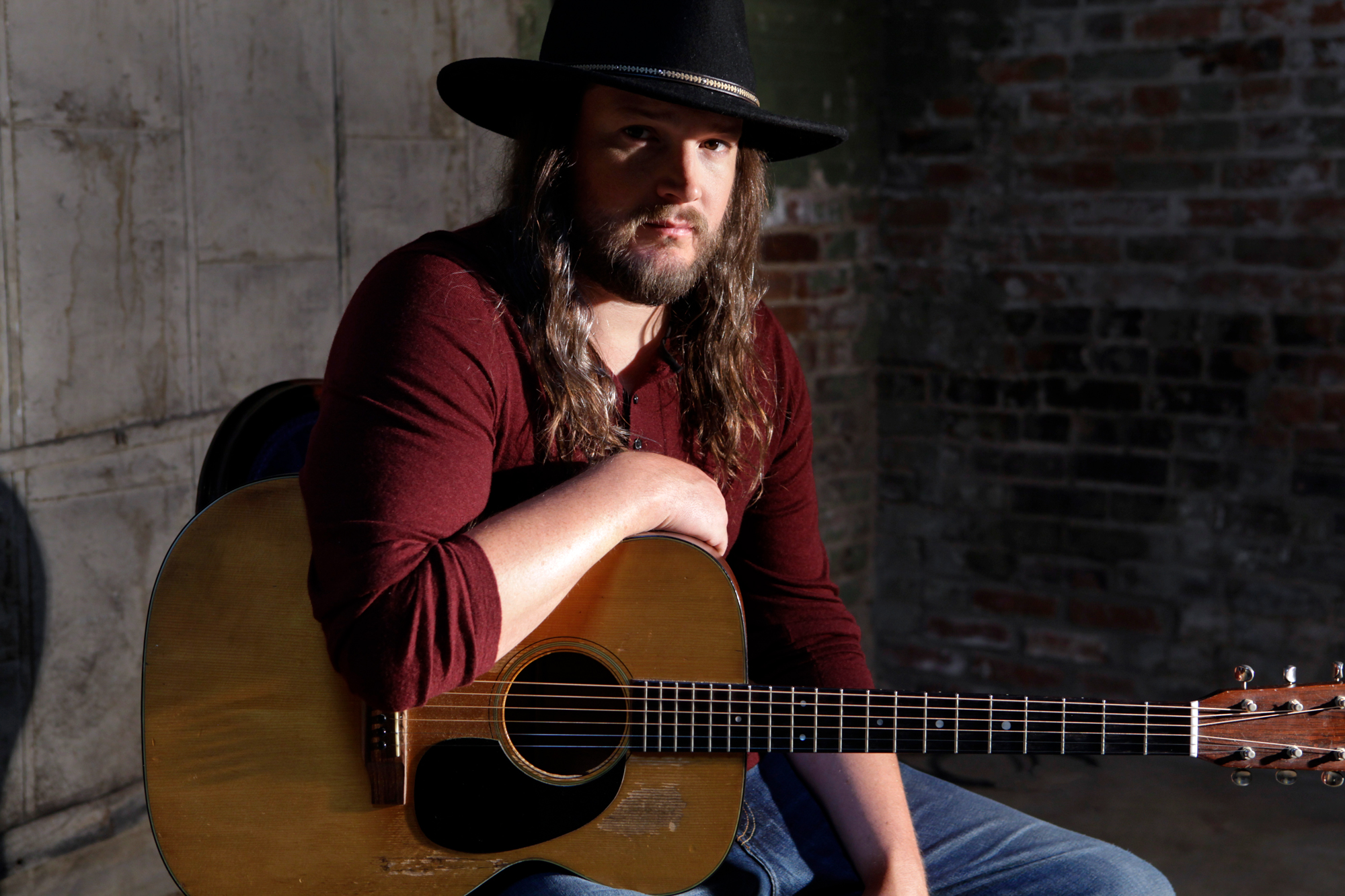
Sunday on the Waterfront: Adam Wakefield (Alternative Country/Southern Rock)

THE PALM BEACH POST SUNDAY ON THE WATERFRONT
Sunday, May 19, 2019
4 – 7 p.m. FREE | Meyer Amphitheatre, 105 Evernia St, West Palm Beach, FL 33401
“Adam Wakefield” (Alternative Country/Southern Rock) www.adamwakefieldmusic.com

Think “New Hampshire” and let the images flow. Cozy inns. Fireplaces. Vivid colors of fall. Crisp, clean air. Deep blue lakes. Adam Wakefield is known for vocals that jolt these lyrics to life with a unique immediacy and intensity. What makes Wakefield different? First, it’s his varied roots: Memphis soul, rock ’n’ roll, New Orleans funk, even jazz and classical, pre-bro country — pretty much all music that speaks from the heart.

A finalist during season 10 of The Voice, Wakefield is that rare singer/songwriter who can bridge the personal and the universal, who can sadly laugh and softly ache through an uncommonly poetic lyric and performance. Working independently, Wakefield hit the top of the iTunes chart with “Lonesome, Broken and Blue,” the original song he performed during the season finale for The Voice. Now he is coming to the West Palm Beach waterfront to give the audience a show to remember.

Guests are encouraged to bring blankets and lawn chairs to this outdoor event. For more information, please visit Wpb.org/events or follow the City of West Palm Beach on Facebook @CityofWPB, on Twitter @westpalmbch or on Instagram @westpalmbch.

Clematis by Night: Reggae Brew (Reggae)

• Thursday, May 23 from 6-9 p.m., on the West Palm Beach Waterfront. 100 Clematis St., West Palm Beach, FL 33401

Reggae Brew (Reggae) www.reggaebrew.com
With the release of his debut album “Reggae Brew,” Florida native Dean Fishback, presents 21st century reggae. “Reggae Brew” is a culmination of all the various styles of reggae music. Fishback’s music is brewing with heavy drum and bass, bubbling with rhythm, layered with melodies, and topped with hot lyrics. After 20 years of working in the reggae music scene, Fishback has established himself as a veteran musician in the reggae community. He has toured and performed as a keyboardist for legendary Jamaican reggae artists, including: Sugar Minott, Leroy Sibbles, Ken Boothe, Alton Ellis, Cornell Campbell, Everton Blender, Glen Washington, Wayne Wonder, Sanchez, Mykal Rose, and many more. Now Dean is bringing Reggae Brew back down to South Florida.

Clematis by Night has been West Palm Beach’s favorite Thursday night tradition for more than 20 years. During Clematis by Night, “Where the Party Begins,” guests will enjoy live music, food and drink specials and the hottest local social scene, creating an unmatched seaside happy hour setting. For more information, please visit Wpb.org/events or follow the City of West Palm Beach on Facebook @CityofWPB, on Twitter @westpalmbch or on Instagram @westpalmbch.

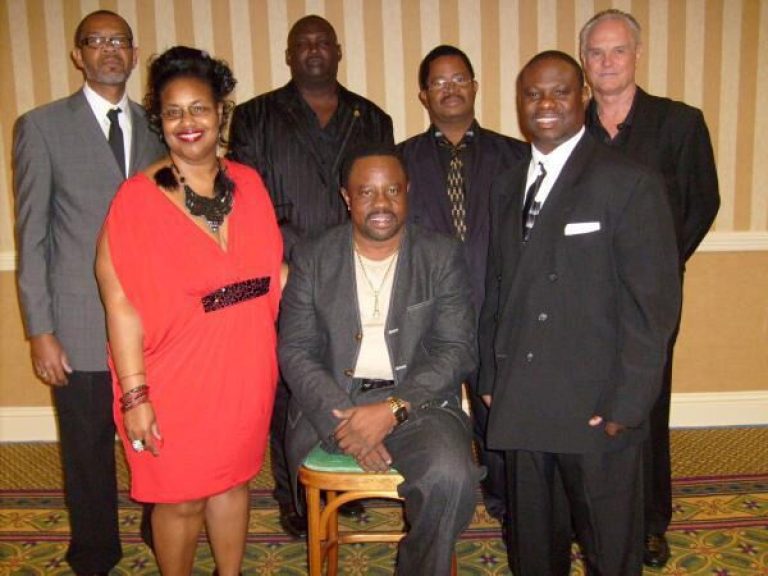
Clematis by Night: The New Horizon Band (R&B/Top 40)

• Thursday, May 30 from 6-9 p.m., on the West Palm Beach Waterfront. 100 Clematis St., West Palm Beach, FL 33401

The New Horizon Band (R&B/Top 40)
The New Horizon Band has a funk, R&B, blues and jazz sound that will make your body move, feet tap and hands clap. The members of New Horizon band have a wide range of talent and they have opened for artists such as Percy Sledge, Archie Bell, B.B. King, and Georgia McCray. Several members have also played at the biggest waterfront festival in South Florida – SunFest. Back on the West Palm Beach waterfront for Clematis by Night, this band is sure to get the party started.

Clematis by Night has been West Palm Beach’s favorite Thursday night tradition for more than 20 years. During Clematis by Night, “Where the Party Begins,” guests will enjoy live music, food and drink specials and the hottest local social scene, creating an unmatched seaside happy hour setting. For more information, please visit Wpb.org/events or follow the City of West Palm Beach on Facebook @CityofWPB, on Twitter @westpalmbch or on Instagram @westpalmbch.

South Florida Science Center and Aquarium Opens Permanent Exhibit, Journey Through the Human Brain

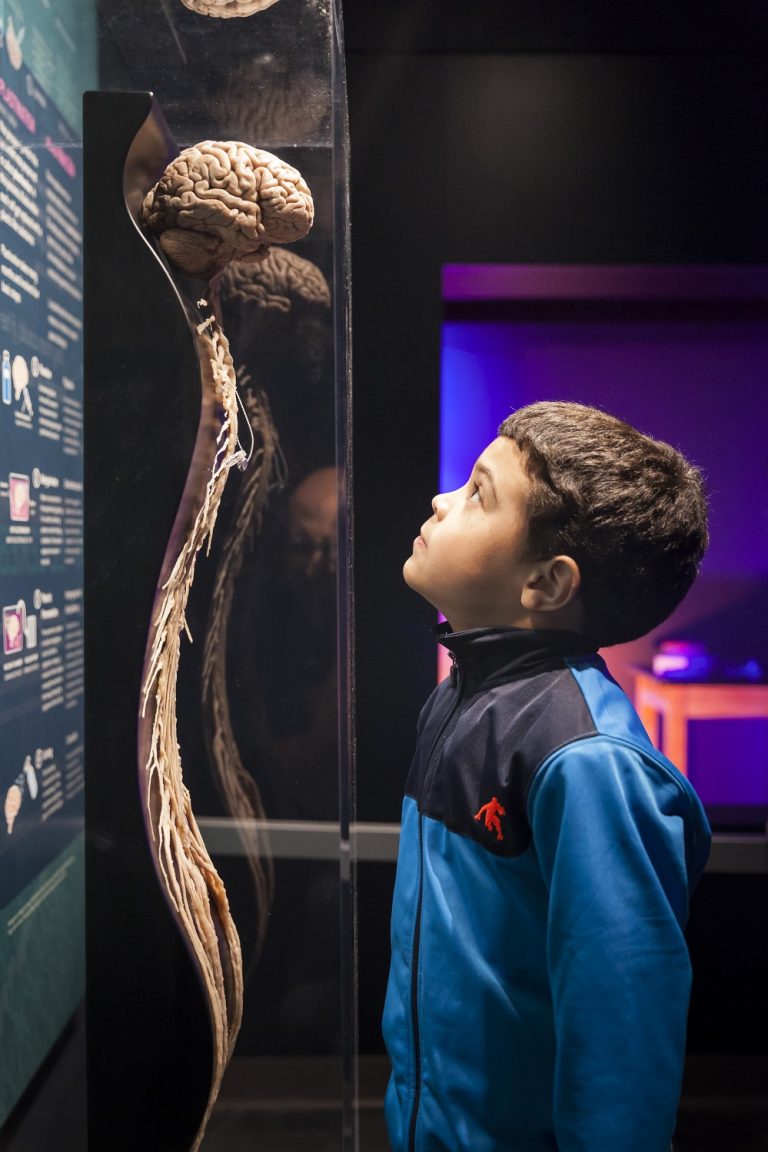
The South Florida Science Center and Aquarium’s Journey Through the Human Brain, a $2.5 million, 2,500-square-foot permanent exhibit is now open after three years of development. According to Science Center President Lew Crampton, it is the most advanced exhibit on the human brain to be found anywhere in the world.

“This is a great day for our Science Center, which – from relatively modest beginnings – is rapidly becoming one of the top community-based science centers in the nation,” Crampton said. “Presenting an exhibit of such depth and breadth has been an incredible challenge, but we have drawn upon the talents and expertise of some of the top minds in our region and the world. We could not have done it without our incredible partners, and I am grateful for everyone who helped us create this important educational exhibit.”

Journey Through the Human Brain takes a bottom-up approach to telling the story of the human brain, from the molecular and cellular level to the integrated circuitry that creates our hopes, fears and memories. The exhibit encompasses a new west wing of the Science Center and includes multiple galleries. Guests are treated to 30 interactives appealing to both adults and children. The Introductory Gallery emphasizes the theme of the exhibit and will even feature a walk-through fog screen and an augmented reality brain projection. An immersive Brain Development Wall shows the growth of the brain over a lifetime. The “Lie to Me” interactive showcases how much effort the brain goes through to lie. The “Senses, Thoughts and Emotions Gallery” allows visitors to explore sight, taste, smell, hearing and touch.

Visitors will learn about ways to adopt a healthy brain lifestyle and students are encouraged to consider careers in health sciences.

The exhibit is a partnership between the South Florida Science Center and Florida Atlantic University’s Brain Institute. Dr. Randy Blakely, Executive Director of the FAU Brain Institute as well as Professor of Biomedical Science in FAU’s Charles E. Schmidt College of Medicine, along with Dr. Nicole Baganz, Brain Institute Director of Community Engagement and Programming, have been instrumental in the construction of the exhibit. Major components of the exhibit also feature significant hands-on participation from the Max Plank Florida Institute of Neuroscience and Scripps Research Institute of Florida.

According to Dr. Blakely, “the brain is endlessly fascinating, whether exploring how it generates our hopes and dreams or what goes wrong in brain disorders. Neuroscientists are giving us an increasingly detailed picture of how the brain is built and works, and we hope through this exhibit to inspire young minds to delve even deeper into brain science.”

Major funders for this exhibit include Quantum Foundation, the Stiles-Nicholson Foundation, John and Heidi Niblack, Robert and Christine Stiller, Willis H. duPont, Palm Health Foundation, and PNC Bank.

“This exhibit specifically addresses Quantum Foundation’s mission to fund education relating to health in Palm Beach County, and it is an honor to partner with such prestigious organizations to bring it to our local community,” said William Meyer, member of the board of trustees for Quantum Foundation. “As a health-focused foundation, it addresses so many of our Foundation’s priority areas and we are delighted to play a role in funding it.”

The Science Center also partnered with local community organizations including the Palm Beach County School District Medical Academies, Center for Child Counseling, Palm Beach County Substance Abuse Coalition and CareerSource of Palm Beach County.

“The trustees of the Stiles-Nicholson Foundation are proud to co-sponsor the Journey Through the Human Brain permanent exhibit as we believe that it will be transformational for STEM education in Palm Beach County,” said David Nicholson, BSc., LLD, CFA, chairman and founder of the Stiles-Nicholson Foundation. “The exciting scientific discoveries in the decade ahead will belong to neuroscience.”

The mission of the South Florida Science Center and Aquarium is to “open every mind to science” and in addition to its fresh and saltwater aquarium and new backyard Science Trail, the indoor/outdoor venue features more than 100 hands-on educational exhibits, a digital planetarium, conservation research station, Florida exhibit hall, Pre-K focused “Discovery Center,” an interactive Everglades exhibit and the 18-hole Conservation Course – an outdoor putting course with science-focused education stations.

The South Florida Science Center and Aquarium is located at 4801 Dreher Trail North in West Palm Beach and is open Monday – Friday from 9 a.m. – 5 p.m., and on Saturday and Sunday from 10 a.m. – 6 p.m. Admission to Journey Through the Human Brain is included in regular ticket pricing, which is $17.95 for adults $15.95 for seniors, $13.95 for kids ages 3-12 and free for kids under 3. Planetarium shows and mini golf are not included in general admission pricing.

For more information, call 561-832-1988 or visit www.sfsciencecenter.org. Like the South Florida Science Center and Aquarium on Facebook and follow them on Twitter and Instagram @SFScienceCenter.

Journey of a Blue-Collar Collector – Part Two

Journey of a Blue-Collar Collector – Part Two

From Sarasota to Palm Beach

By Angela Shaw

In Part One of Journey of a Blue-Collar Collector, we left Phil Materio in search of new indigenous artists. He had collected hundreds of pieces of Highwaymen art and was ready for fresh discoveries. With Maybelle Mann’s book, Art in Florida leading the way, Materio’s sights turned to Sarasota, one of three art centers in the state.

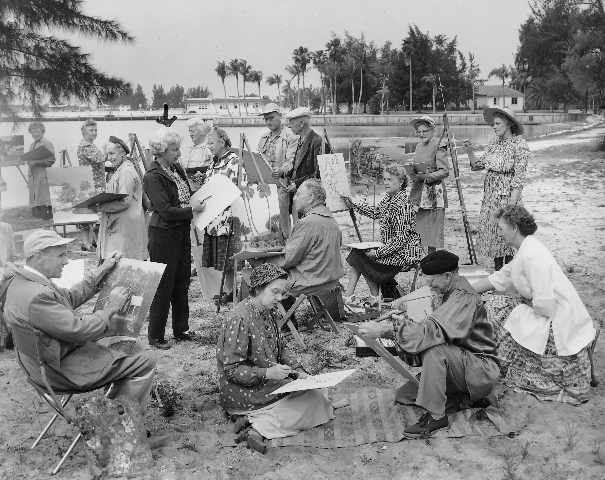
There he found artists and subjects focused on the Ringling Brothers’ Circus culture. Sarasota had long been the show’s winter home, which brought with it colorful performers and animals from all over the world.  At the same time, painters from the northeast and the Hudson River seeking warmer climates and fresh inspiration migrated south.  

In Sarasota, Ringling established an Art school where several of these painters attended and taught, including Helen Sawyer, Hilton and Dorothy Leech and Jerry Farnsworth. These developments that started in the late 1800s grew a thriving creative community that boasted over 3000 members in the mid-century. Most artists were realists and impressionists, but few abstract artists joined them such as Syd Solomon.

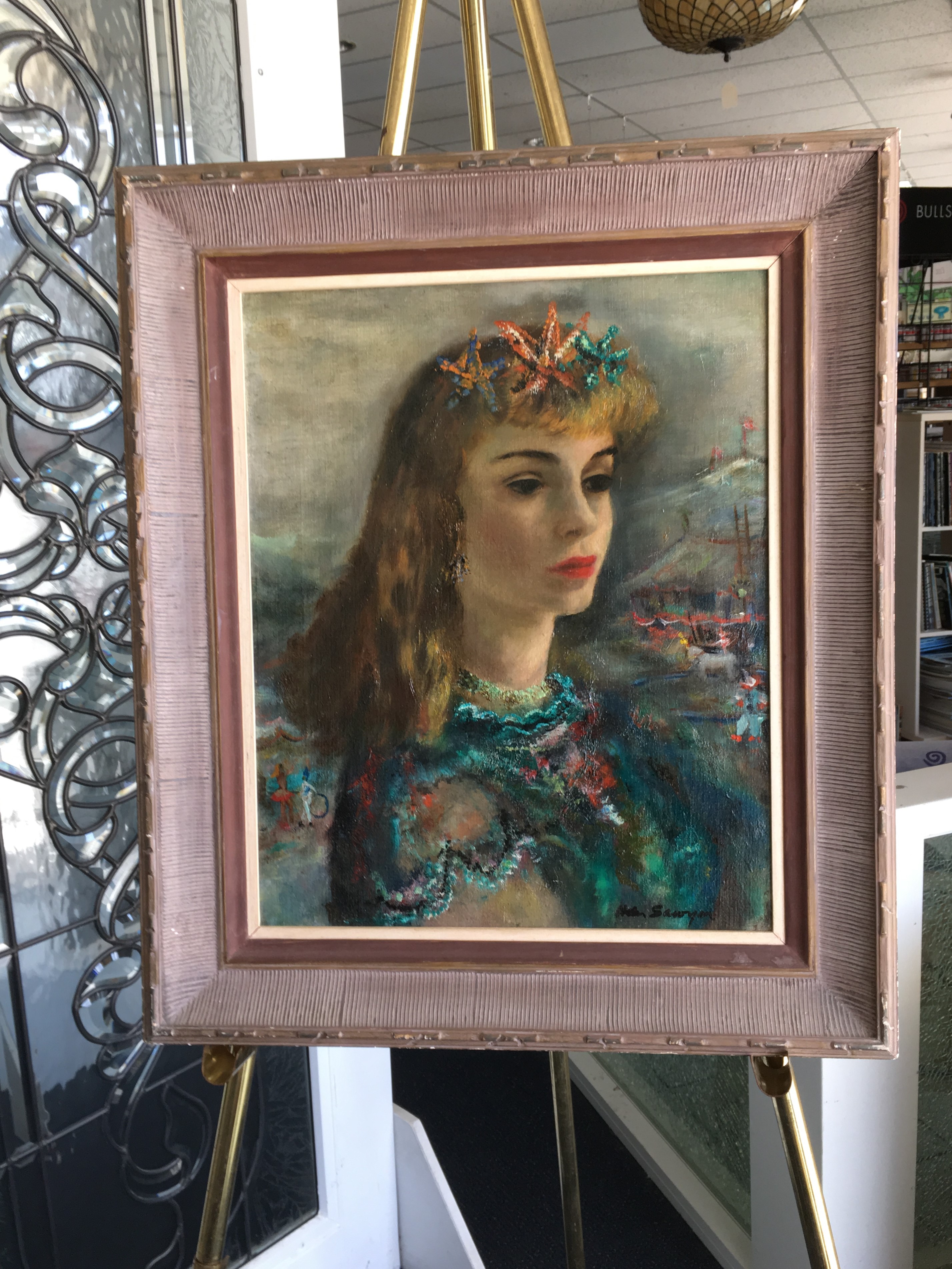
Helen Sawyer “Dolores” oil on canvas

What route did Phil follow in his expanded search? While physical trips to auctions, exhibits and museums sent him throughout the state, Materio found himself spending about an hour each morning navigating eBay before work at his art glass studio. Filtering his search to little-known and affordable painters, he continued to add to his blue-collar collection.  Books like Kevin Dean’s A History of Visual Art in Sarasota and Robert Wilson Torchia’s St. Augustine: The Lost Colony helped to map his journey and lead him to the second art hub in St. Augustine.

That Henry Flagler built his luxury Ponce de Leon Hotel—known now as Flagler College—is no secret. But many are unaware that Flagler also founded an art colony behind his hotel. By creating a community of culture, he hoped to attract people of means and education. He invited artists from Rhode Island and New York and other northern areas to join his Society of Painters as chronicled in Sandra Barghini’s book, A Society of Painters: Flagler’s St. Augustine Art Colony. Among those artists were Martin Johnson Heade, George Seavy and William Staples Drown who made their mark.  They immortalized the quaint street corners and surrounding areas of this oldest city in America.

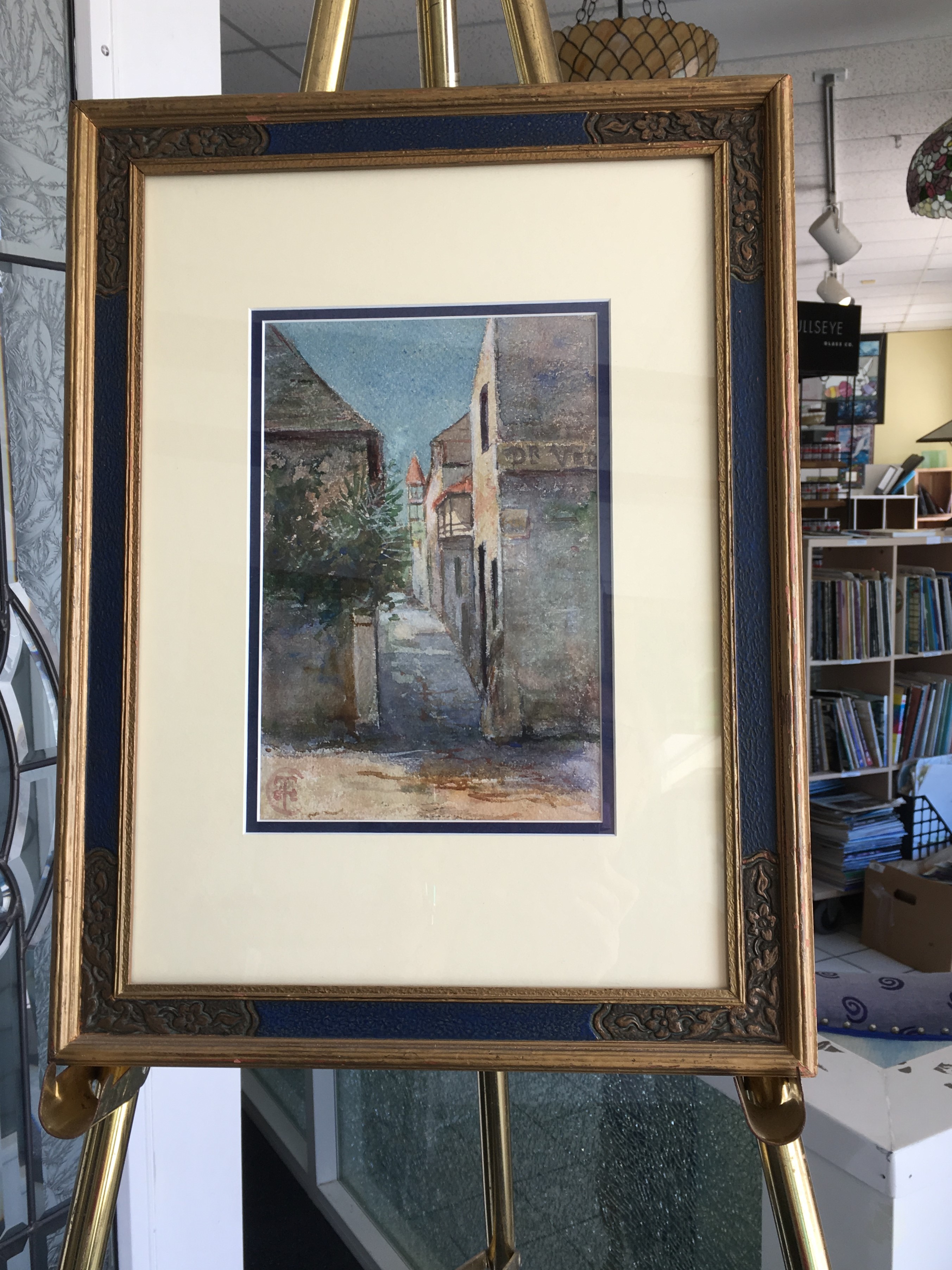
Felix de Crano “Treasury Street” St Augustine, 8×10 watercolor, 1907
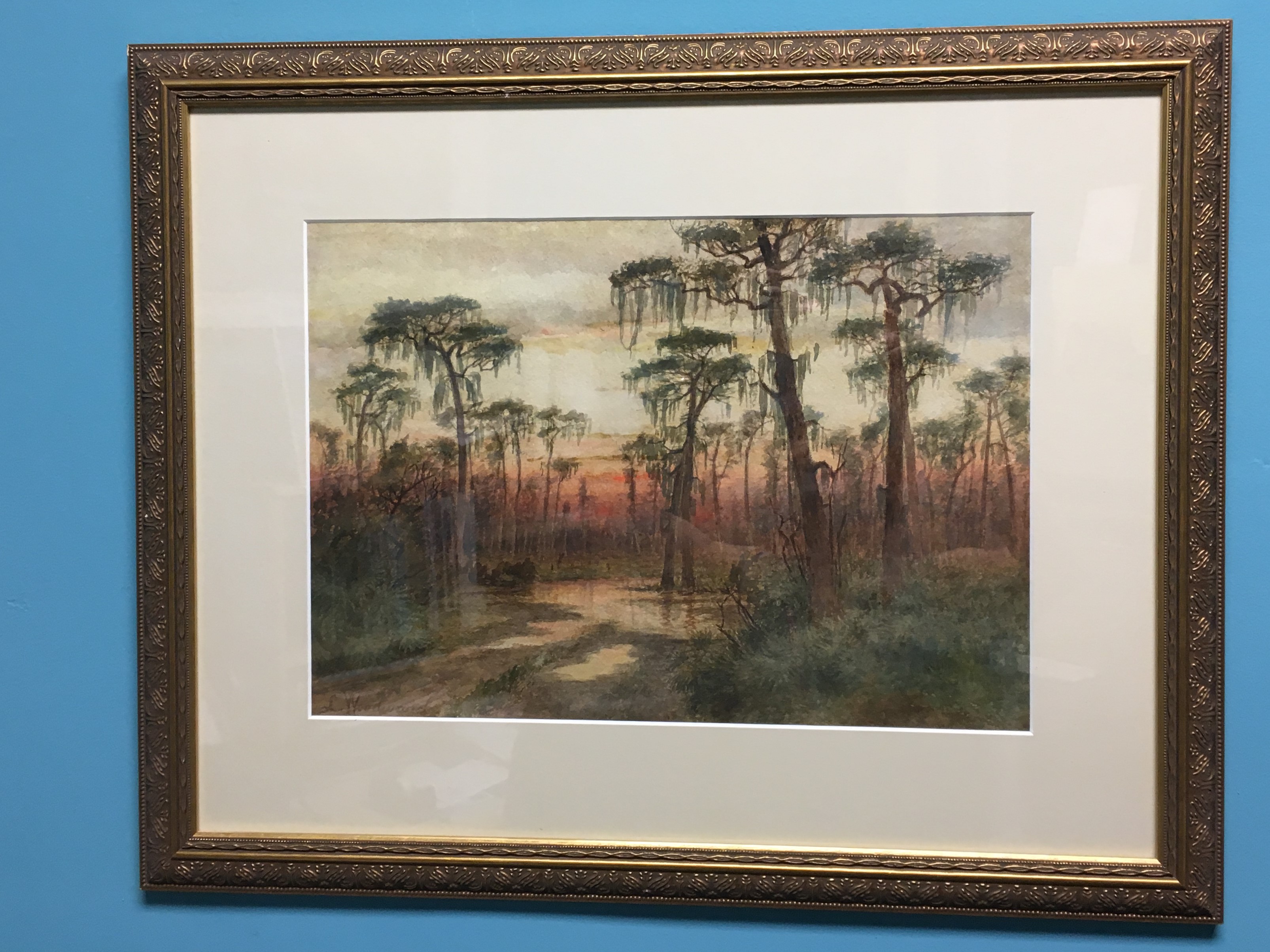
Laura Woodward “Afterglow” watercolor

Felix de Crano and Laura Woodward were also among the prominent painters. But perhaps Laura Woodward made the biggest statewide impact. She primarily painted landscapes and pastoral scenes.  When she took a steamer south to the next major port and landed in Palm Beach. There for several months, she stayed at a rooming house and set on canvas even brighter bougainvillea and hibiscus. When she sent her works back up to St. Augustine, Flagler was impressed by the truly tropical vegetation. The paintings were actually quite instrumental in the extension of his railway system southward. How remarkable that art led the way for this entrepreneur. A full story of the phenomenon can be found in Deborah Pollack’s The Artist Behind the Innovator.

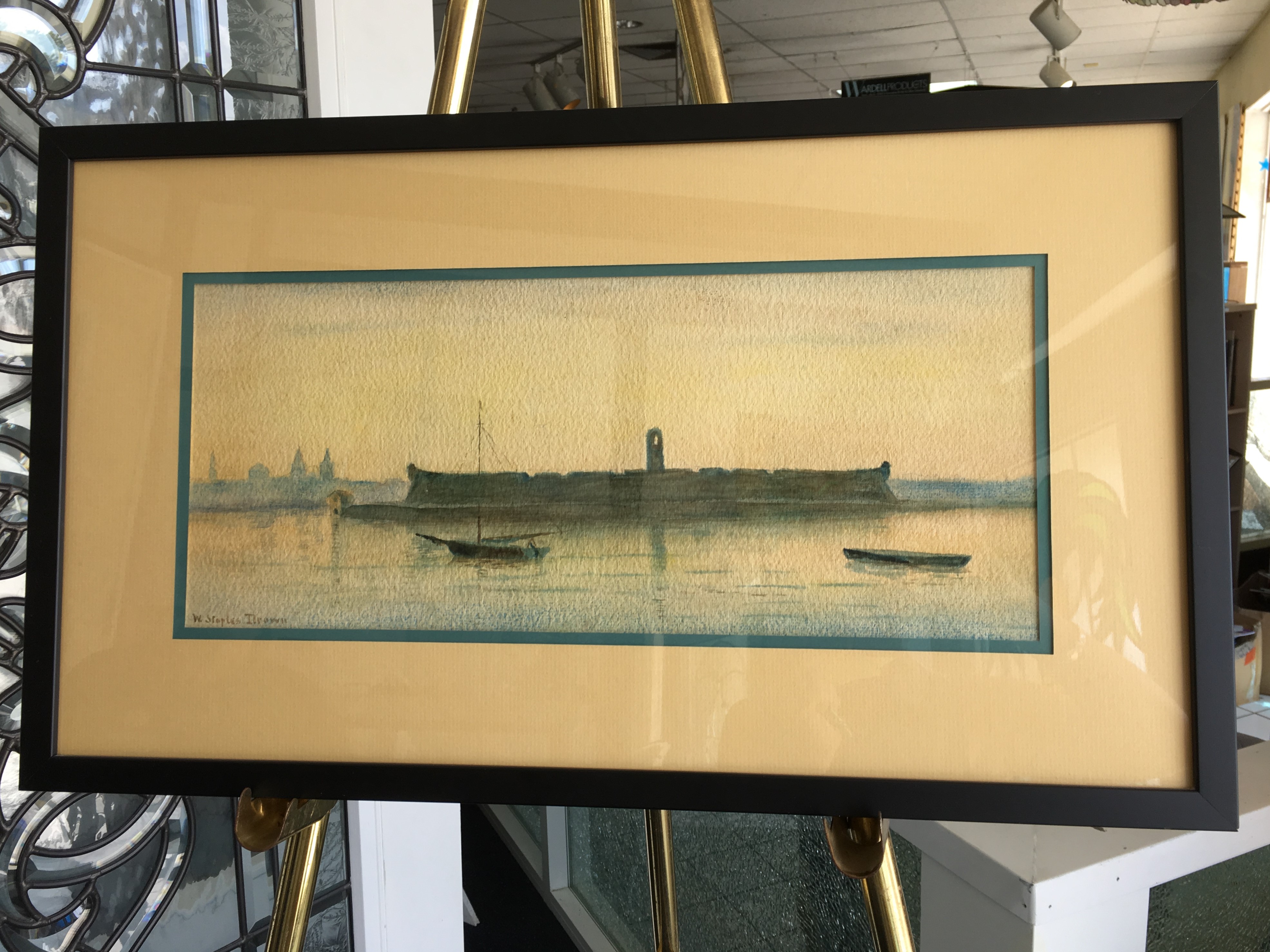
William Staples Drown “Castille de San Marcos” St. Augustine watercolor

As other artists joined Woodward in Palm Beach, area landmarks and landscapes became their subjects. Soon an art school and eventually the Norton Art Museum came to life. Many Palm Beach estates and hotels these early painters painted have since been torn down or burned. If it wasn’t for the artwork, and a few photographs, their memory would be lost. Also of note, are the federally funded murals that these artists created in public spaces.

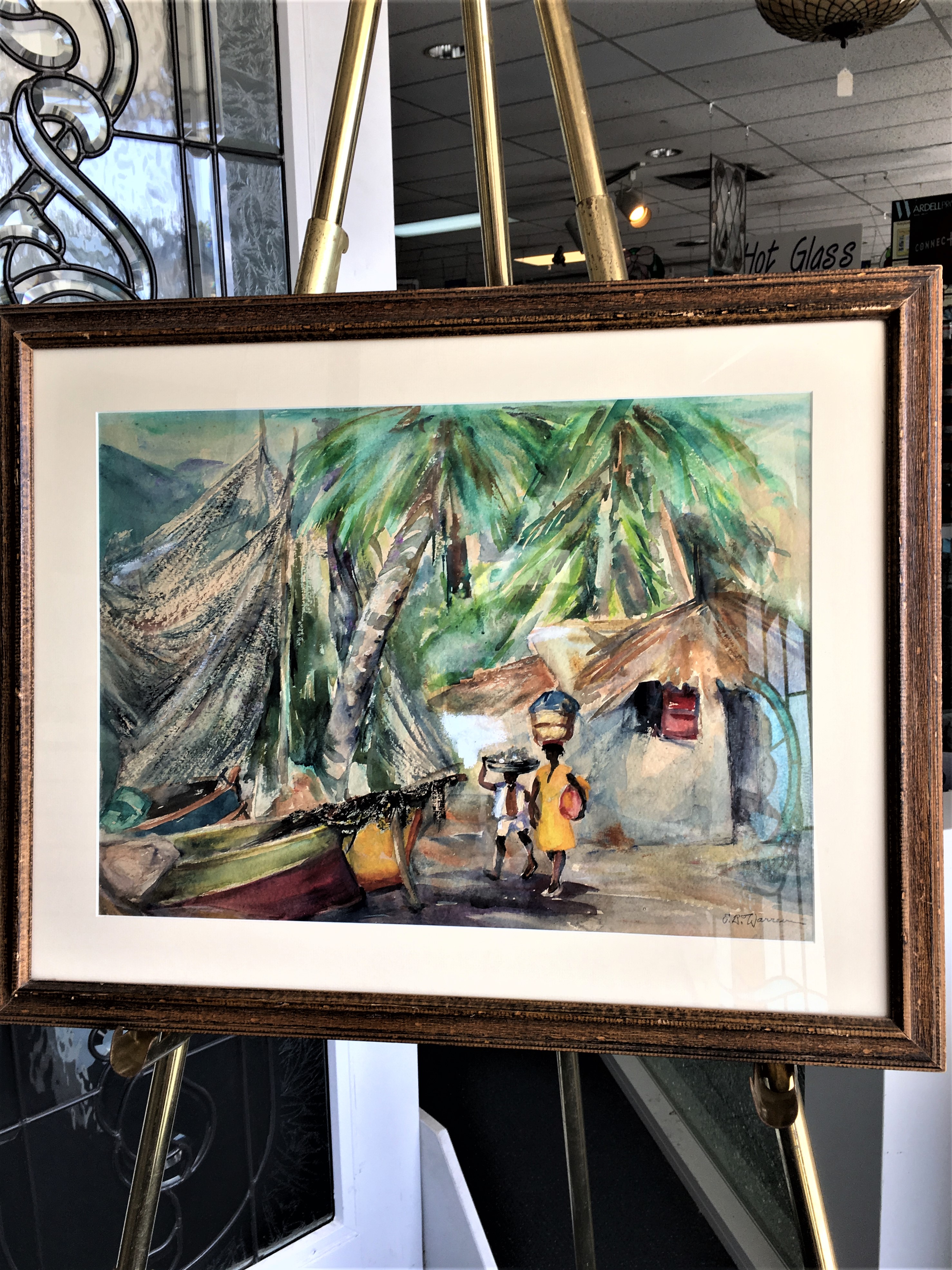
“Island Life” – Elizabeth Warren, 50s

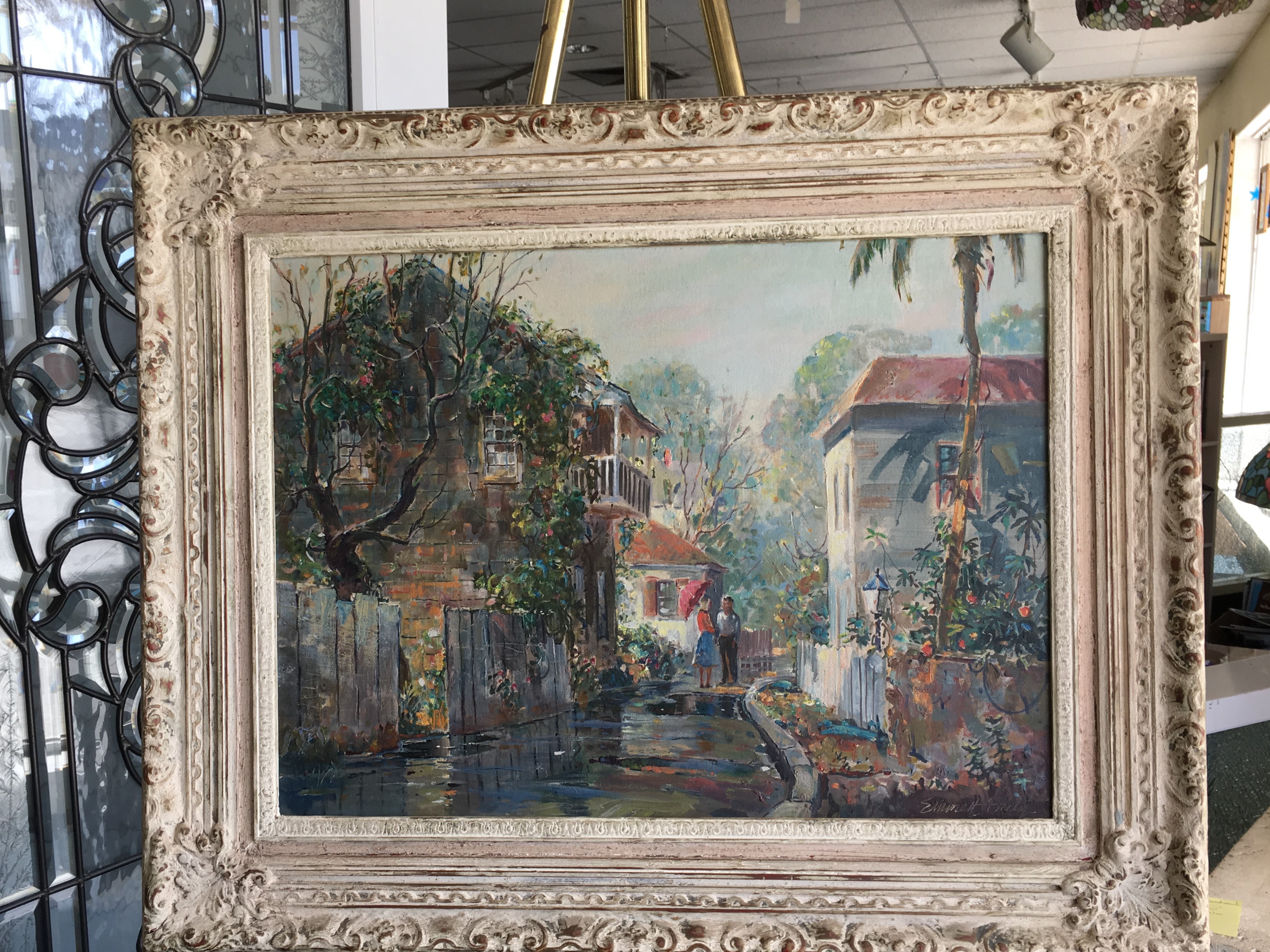
Besides authoring his book, St. Augustine’s Lost Colony, Robert Wilson Torchia served as director of the Lightner Museum. His book features the work of Emmett Fritz, William Kronberg, Harold Maddox, Heinrich Pfeiffer and Celia Gregory Reid and others. Elizabeth Boardman Warren’s etchings and watercolors of African American life in St. Augustine were of particular interest to Materio as they recorded early Florida folk life.

“Marine Street after a Shower” Emmett Fritz, oil on board

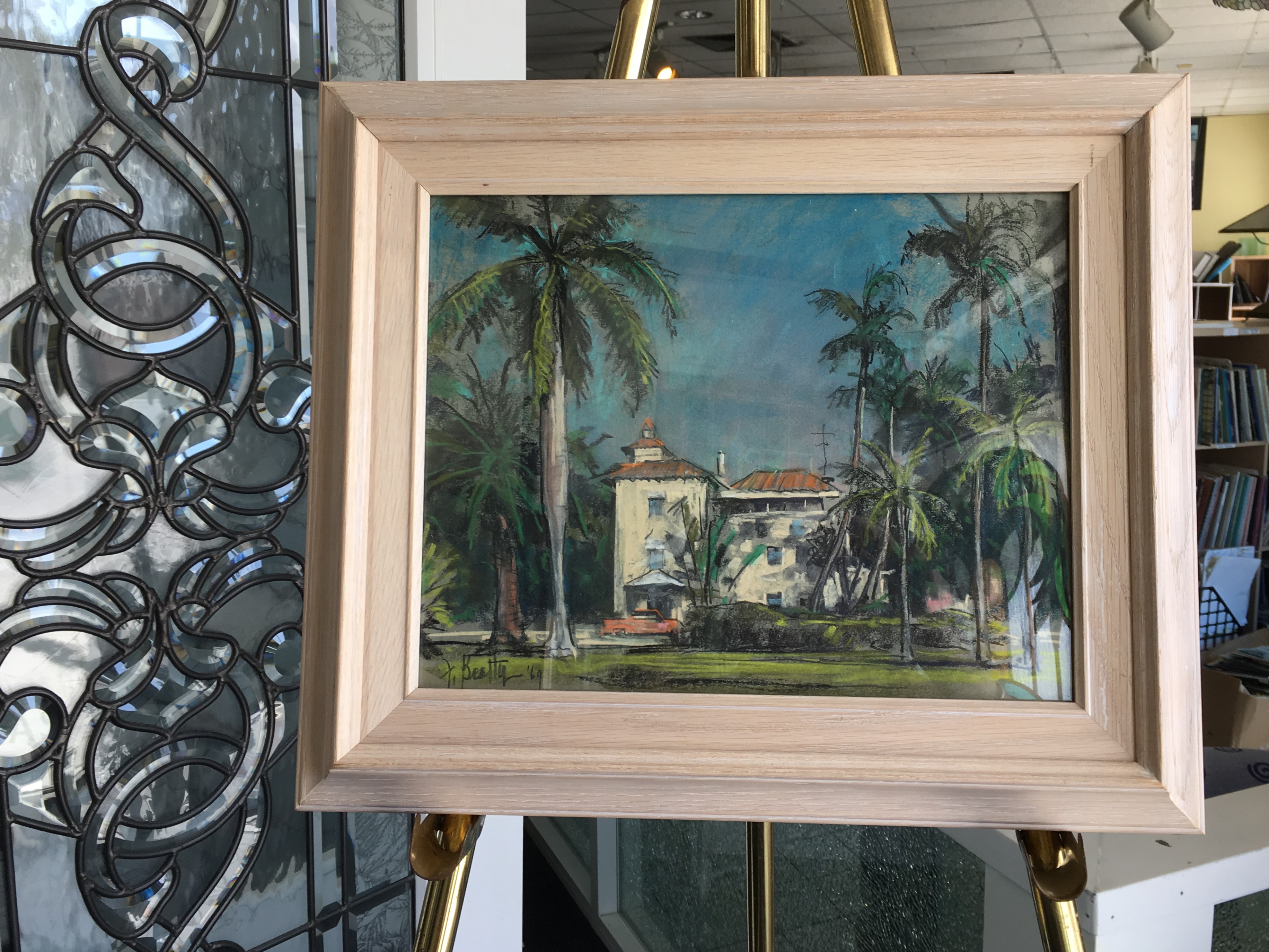
Along the way, Phil Materio discovered Frank Beatty, who eventually became his personal favorite. Out of Chicago, Beatty served as Art Director for Popular Mechanics magazine. A world-traveler, he spent extensive time in the Caribbean and ended up in West Palm Beach. Beatty’s subjects include the Jupiter inlet and lighthouse, Christian Science Reading Room and Bethesda by the Sea church, painted in oils, acrylic and gouache-watercolor.

“Palm Beach Residence” 1969, Frank Beatty, pastel on paper

Now Materio studies Key West artists. I asked him what he will do next with all of his extensive collection and impressive amount of knowledge. Mr. Materio says a possible south Florida exhibit is underway in Lake Worth, but details have yet to be solidified. I’ll be the first to be there.

How about you? What smoldering passion do you have that has yet to be pursued? What curiosity could you investigate that might enrich your life and the life of others? Phil followed his interest and on a blue-collar budget, built a collection enviable my many, soon to be enjoyed by all.

South Florida’s Best Kept Secret: Panther Ridge

South Florida’s Best Kept Secret: Panther Ridge

By Bryan Hayes

When talking to many of my friends they ask, “What is that” when I tell them about the Panther Ridge Conservation Center, now located in Loxahatchee.  

It was because of this that I was most excited about the opportunity to go back to the Panther Ridge Conservation Center as I have not been there since they relocated.   The new area not only gives the cats room to roam but also for the facility itself to grow and expand.  Now, they have much more space for all of their 20 big cats that currently call Panther Ridge their home including panthers, jaguars, leopards, clouded leopards, servals, ocelots, a caracal, and a cheetah.   

What makes Panther Ridge so unique is that you are able to get up close and personal with the cats during the guided tours.  Obviously, they are at a safe distance that is out of harm’s way, not only for us humans but also for the safety of the animals as well.  They are though close enough that you are able to watch a lot of them being fed their snacks for the day.

You can choose the regular one hour guided tour or the two hour guided tour by the head keeper.  Either way, it is a unique experience to not only see the cats but to also learn about their individual stories.   Like so many animals in the wild that are endangered, not only is the conservation aspect critical, but also the education as well.   

Some of the cats came to the center as abandoned adult pets, who as kittens may have looked incredibly cute, but they are still a wild animal who can and do grow to be very large and aggressive.  They are not house cats.  For all cats though, something I learned during our tour is that declawing is a very inhumane practice that is incredibly painful to the feline.

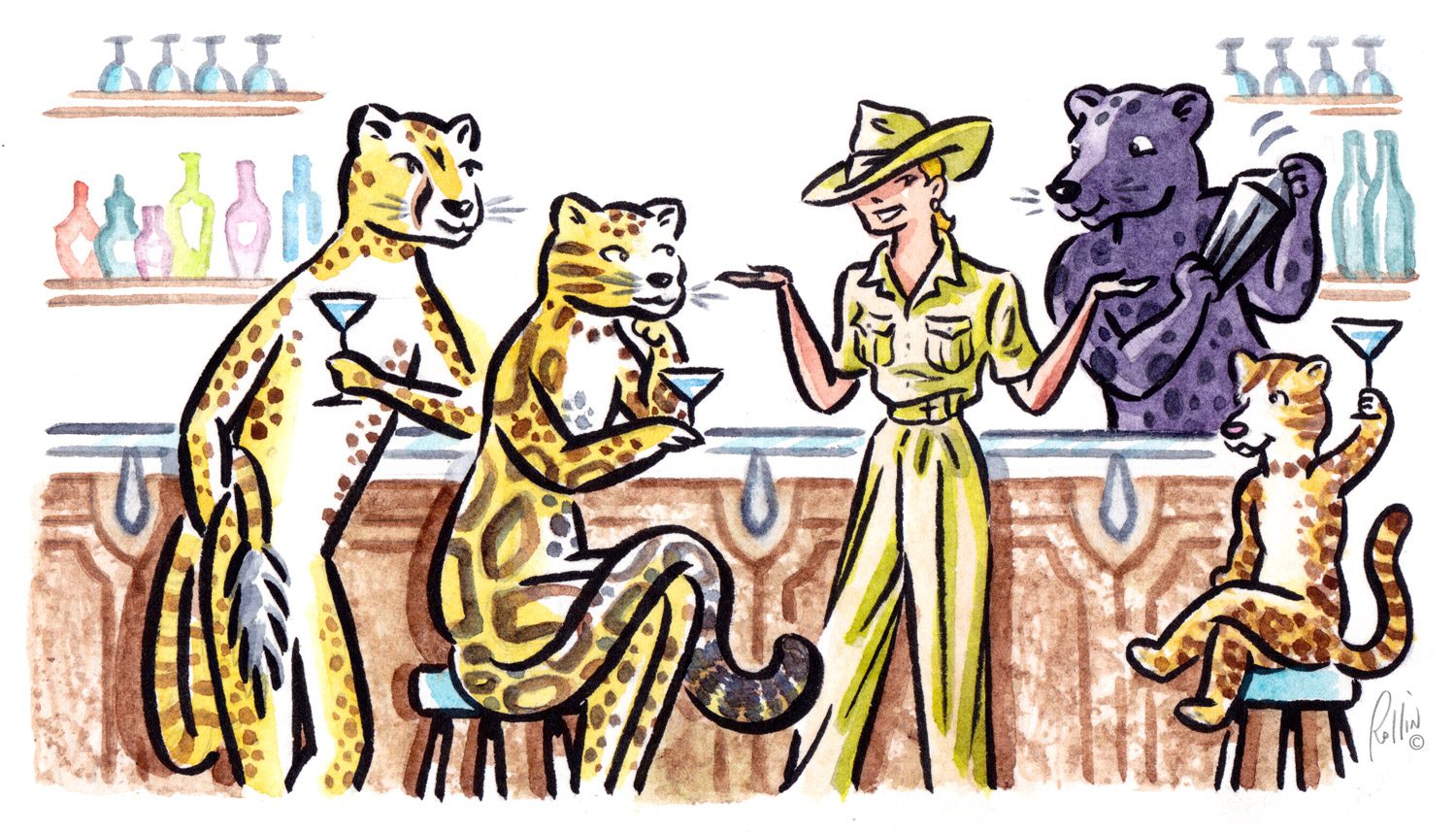
Illustration by Rollin McGrail.

To learn more about Panther Ridge, you can visit their website at http://pantherridge.org.  To schedule your own tour, call (561) 795-8914.  

Panther Ridge Conservation Center is a non-profit organization, so if you would like to sponsor one of the cats or donate, all of the proceeds go directly to the care and well being of the animals. 

West Palm Beach Police Athletic League Celebrates Sold-Out and Successful Ballroom Blitz

0

West Palm Beach Police Athletic League Celebrates Sold-Out and Successful Ballroom Blitz


West Palm Beach, FL. – It was an evening of glitz, glamour and a good time as the West Palm Beach Police Athletic League (PAL) hosted the 3rd Annual Ballroom Blitz. The event, which took place on Friday, April 5, 2019 at the Kravis Center for the Performing Arts, brought together area leaders and community members for a night of dinner, dancing, cocktails, and tons of fun in support of the programming the nonprofit brings to the downtown West Palm Beach area. 


“We are thrilled to have beaten our fundraising from last year {by 20%!} and to use those monies for the programs so vital to this community,” shared PAL Board President, Melissa Nash. “We had incredible dancers, sponsors and friends at this event, and we are so grateful to everyone who helped us sell out. It was even more exciting to have our National PAL Director Jeff Hood, who helped us raise even more money in our Call to the Heart by bringing in a single, last minute donation of $10,000!  We are looking forward to implementing even more programming for the children and teens who utilize the services of our WPB PAL. “


Ballroom Blitz, a Dancing with the Stars style event, featured one amateur and one professional dancer each showcasing a different style of dance. Hank Polidori and Doreen Scheinpflug took home the top prize (and bragging rights) of the highly coveted mirror ball trophy. The 2019 “Blitzers” included: Jeannine Rizzo, Adelfye Cedeno, Hank Polidori, Sal Senzatimore, Jake Rothman, Jillian Idle and Davidde Giordano.  Winners of the event will be crowned the STARS of 2019. 


Other notable guests in attendance included: Congresswoman Lois Frankel, City Commissioner Christina Lambert, City Commissioner Joe Peduzzi, and WPB Police Chief Sarah Mooney.


Funds raised from this event support PAL’s Teen Club, an afterschool youth leadership program with doors open 6 days a week, hosting art class, leadership programs, educational field trips and teen talks with community leaders. Located in a community with a negative story line, PAL is working to change that storyline by providing a safe place to teach the youth that they can create the change. The nonprofit is committed to enhancing the self-confidence, social, physical, and emotional needs of children through athletics, education, life skills, and mentoring. Using these tools, juvenile crime and violence is being reduced and achieving their goal of filling playgrounds — not prisons. 


Sponsors included: Related and Fred Astaire Dance Studio. To learn more about this event, or to get involved with the West Palm Beach Police Athletic League, please call (561) 835-7195 or  visit  www.westpalmbeachpal.com

Low-Quality Lighter Imports Create Urgent Need for Lighter Safety Education

0

BIC Lighter Safety Report: Low-Quality Lighter Imports Create Urgent Need for Lighter Safety Education

Findings Reaffirm Urgent Need for Lighter Safety Education

Shelton, CT (May 6, 2019) — Today, BIC, a world leader in manufacturing safe, high-quality lighters, unveiled its inaugural Lighter Safety Report drawing attention to a concerning influx of low-quality, unsafe lighter imports into the United States.  This finding, paired with a lack of education about lighter safety, threatens consumers’ safety.

Twenty five years ago this year, with the support of BIC, the Consumer Product Safety Commission (CPSC) mandated that all lighters, like BIC, sold in the U.S. have enhanced child-resistant features to reduce the risk of children accidentally starting fires with lighters.

While that is the only requirement issued by the CPSC, ASTM International, one of the world’s largest standards-developing organizations, established voluntary lighter safety standards consistent with specifications that are mandatory in many other parts of the world. However, BIC found that 70% of lighter models tested from the U.S. did not meet these safety standards. This means that many lighters available for purchase could potentially lead to serious fires, property damages or injuries. 


This discovery inspired a survey commissioned by BIC and conducted online by The Harris Poll among over 2,000 U.S. adults, which found a lack of lighter safety knowledge among consumers. Addressing these unsafe lighter practices is particularly important for parents of young children.


Key Survey Findings Include:


  • 77% of Americans don’t realize that all safety standards, aside from requiring a child-resistant feature, are voluntary for lighters sold in the U.S. and many are not taking necessary safety precautions. Also, 81% of Americans don’t know that most pocket lighters in the U.S. are not tested extensively for safety.
  • While 68% of parents say their children have been taught about fire safety, less than half (48%) say their child has been taught about pocket lighter safety.
  • 59% of parents have not taught their children that if they find a lighter, they should not touch it and show an adult where the lighter is.


For full survey results, download the report at www.biclighter.com


“The BIC Lighter Safety Report is intended to educate consumers on the potential dangers of low-quality lighters and ensure they are taking the necessary steps to protect themselves and their families when purchasing, using and storing lighters,” said Mary Fox, General Manager of BIC North America. “Safety is a cornerstone of BIC’s business and is the number one priority for BIC® Lighters. BIC is committed to manufacturing and delivering the safest and highest quality products alongside educating the communities it proudly serves.”

BIC Teams Up with Fire Safety Leaders to Increase Lighter Safety Education

BIC is teaming up with a number of fire safety experts to encourage safer lighter practices for families, including: Fireproof Children (a division of Community Health Strategies), the National Association of Fire State Marshals, and former fire fighter and famous “Bachelorette” winner, Ryan Sutter.

BIC Lighters also hosted a lighter exchange from May 2 – 5, 2019 at SunFest music festival in West Palm Beach, Florida, replacing attendees’ lighters with an iconic BIC Lighter, trusted for its consistent high-quality and safety.

Additionally, BIC will be incorporating the data from the report into its fire safety education play safe! be safe! ® program, hosted in partnership with Fireproof Children.  Since the program’s introduction in 1994, the same time of the CPSC mandate, more than 120,000 fire safety education kits have been distributed across the U.S. and Canada, reaching close to 30 million children.

“The lighter safety report allows fire safety educators to spot information gaps among parents and children,” said former Miami-Dade Fire Rescue Captain Maria Figueroa-Rodriguez, a current play safe! be safe! Facilitator. “Partnering with BIC on fire and lighter safety education has proven to be successful in preventing fires and unsafe behavior among children. We are looking forward to integrating the new findings from the report in to our program to ensure lighter safety is more widely practiced.”

Lighter Safety Tips for Consumers

Below are the updated recommendations on lighter safety, released in the report:

  • Store lighters out of sight and reach of children, in a secure location.


  • Teach young children to tell an adult immediately if they find a lighter or matches, and not to touch them. Not all parents own lighters. Even if you do not have a pocket lighter in your home, a child could encounter one almost anywhere.


  • Explain that lighters are dangerous adult tools, and ensure children know that lighters are not toys. Never use novelty lighters that look like toys or playful objects around children.


  • Never use a lighter if it’s been compromised in any way, for example, after exposure to excessive heat or prolonged sunlight, * or in violation of the warnings and instructions accompanying all BIC Lighters.
  • Know that all lighters are not created equal. Every BIC lighter undergoes more than 50 separate, automatic, quality checks during the manufacturing process. However, low-quality lighter imports may not meet the ASTM International Safety Standards, which could result in a lighter malfunctioning.
  • Only purchase lighters that meet key safety standards. Choose a brand you trust, such as BIC Lighters, which are guaranteed to meet or exceed all recommended and mandatory safety requirements.


*Warning: Ignite lighter away from face and clothing. Contains flammable gas under pressure.  Never expose to heat above 50 degrees Celsius (122 degrees Fahrenheit) or to prolonged sunlight. Never puncture or put in a fire. Be sure flame is completely out after each use. Do not keep lit for more than 30 seconds.


Full report findings and tips are available on the BIC website Biclighter.com.

Survey Methodology

This survey was conducted online within the United States by The Harris Poll on behalf of BIC from March 14-18, 2019 among 2,015 U.S. adults ages 18 and older, including 756 frequent pocket lighter users (weekly or more often) and 644 parents of children ages 18 and under. This online survey is not based on a probability sample and therefore no estimate of theoretical sampling error can be calculated. For complete survey methodology, including weighting variables and subgroup sample sizes, please contact Raquel Tanz; rtanz@gscommunications.com

About BIC

BIC is a world leader in stationery, lighters, and shavers. For more than 70 years, including 60 in the U.S., BIC has honored the tradition of providing high-quality, affordable products to consumers everywhere. Through this unwavering dedication and thanks to everyday efforts and investments, BIC has become one of the most recognized brands and is a trademark registered worldwide for identifying BIC products which are sold in more than 160 countries around the world.

The BIC Lighter is recognized worldwide for producing a safe, reliable flame for millions of consumers every day.  Each day, BIC produces more than 7 million lighters a day worldwide and, since 1973, has sold more than 40 billion lighters.

About play safe! be safe!

This award-winning fire safety program was developed by BIC in partnership with Fireproof Children, a division of Community Health Strategies, and other educators and fire safety experts. Since its introduction in 1994, BIC has distributed more than over 120,000 play safe! be safe! kits and has sponsored fire safety training workshops in every U.S. state and Canadian province. For more information, visit  https://www.playsafebesafe.com/.

Bark A Thon on June 1st

Bark A Thon

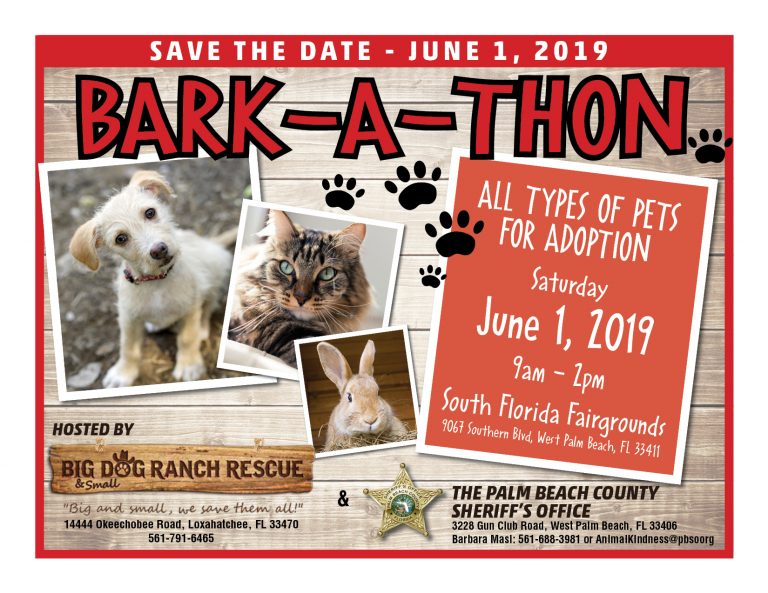
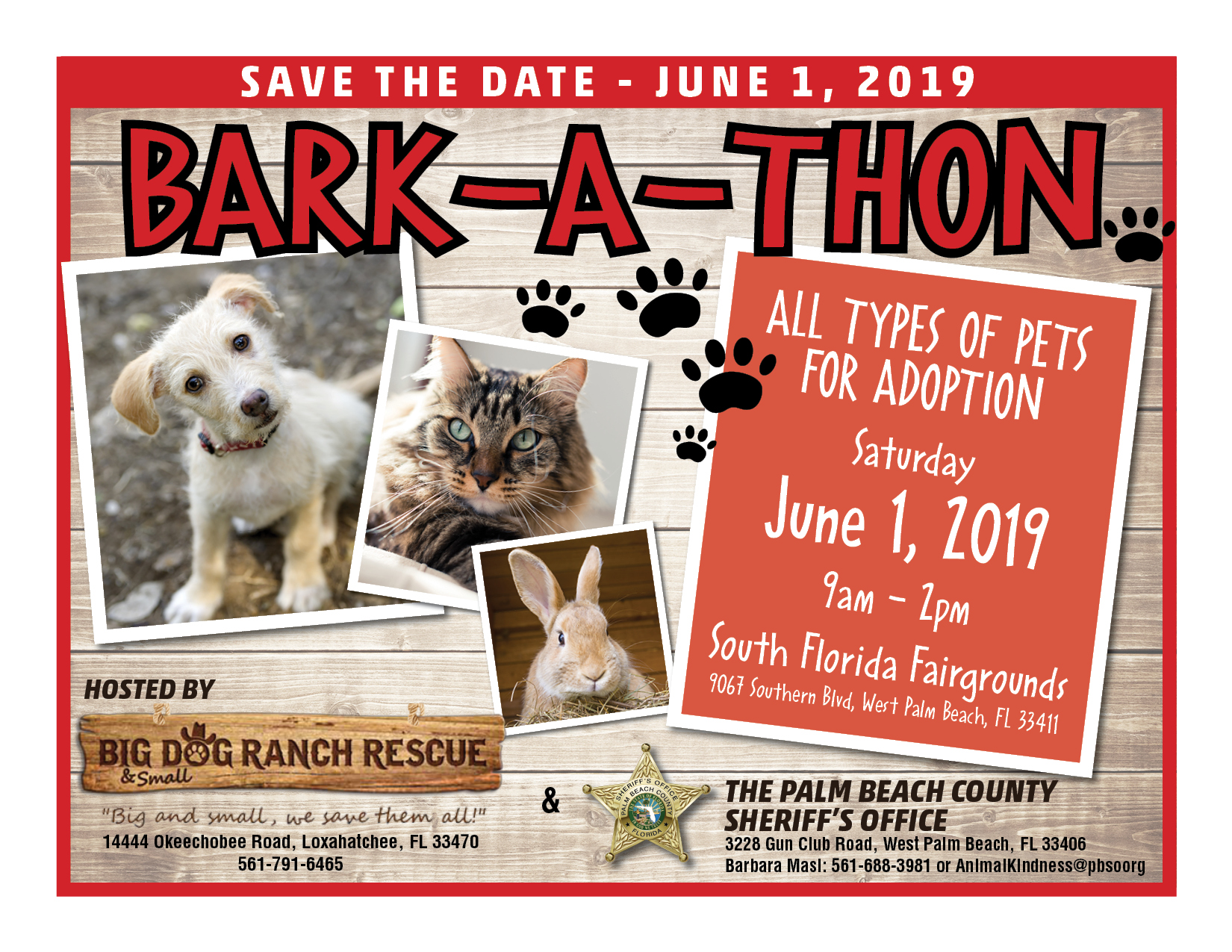
The first annual Bark A Thon will be on Saturday, June 1, 2019 at the South Florida Fairgrounds from 9 am to 2 pm. This event is sponsored by the Palm Beach County Sheriff’s Office in conjunction with Big Dog Ranch Rescue. 

The purpose of this event is to adopt puppies and kittens, dogs and cats from area rescues and shelters. The groups that will be attending are some you may be familiar with and some of the smaller groups that have been invited to give them a chance to showcase their animals and their organization.

In previous years PBSO has presented the Run for the Animals and then Raining Cats and Dogs. These were more family events and were outdoors at Okeeheelee Park.  The change was made this year in order to have an event in the summer months, under air conditioning, solely for the purpose of adoptions. 

We have the larger rescues and shelters that will be there (Animal Care and Control, Furry Friends, Big Dog Ranch and Peggy Adams) and many of the smaller groups. There are over 20 signed up as of the beginning of May – and they represent both the canine and feline population.

Aside from the adoptions we will have animal related vendors for your shopping pleasure. Again, they are the smaller vendors that need and deserve more visibility in our community.

This is a free event for all – rescues, shelters, vendors and the community. Please put this on your calendar to attend.

For additional information contact Barbara Masi at AnimalKindness@pbso.org or 561-688-3981