Five More Weight Busting Foods You Have to Include in Your Diet
I had so much interest with regard to my article titled “Eat
These Five Weight Busting Foods and Watch the Weight Drop Off” that I am adding
5 more foods to the list.
Considering we are now at the beginning of another year and so many of you list losing weight as one of your New Year’s resolutions, this may very well help you get started.
Boiled Potatoes
When was the last time you ate potatoes? It would seem that they have fallen out of favor over recent years. However, they do have several properties that make them a perfect food, not only for weight loss but also overall optimal health. In fact the common ‘spud’ contains an incredibly diverse range of nutrients, almost a little bit of everything you need. They are incredibly high in potassium, which is often a nutrient that most of us don’t get enough of. Potassium plays an important role in blood pressure control. What is also a great fact about white boiled potatoes is that on the Satiety Index (a measurement gauging how filling various foods are) they scored the highest out of all foods tested. Good news when you are trying to reduce overall calorie intake. Also if you allow potatoes to cool for a while after boiling, they will form high amounts of resistant starch which is a fiber-like substance that has been shown to have various health benefits, including weight loss. Sweet potatoes, turnips and other root vegetables are also excellent.
Tuna
Tuna is lean fish, low in fat, low in calories and high in
protein, a winning combination when you are trying to lose weight. Obviously
fresh tuna is the optimal choice, however if you are eating the canned variety
ensure you opt for the tuna in water not oil.
Beans and Legumes
Whilst most beans and legumes are beneficial for weight loss the
best varieties are lentils, black beans and kidney beans. They will often be
high in protein and fiber which are two nutrients that make you feel full.
Soups
A diet with a low energy density will often make people eat less
calories at each sitting and keep you fuller for longer. It has been proven
that most foods with a low energy density are foods that contain a high
percentage of water, namely fruits and vegetables. Therefore, with water being
a common denominator, adding water to your food gives the same affect. This is
where soups come into their own. Some studies have actually shown that if you
eat the same food but turn it into a soup you will feel significantly fuller.
Obviously avoid creamy, fatty or oily soups, but a hearty vegetable or lentil
soup is incredibly satisfying and an overall healthy choice.
Cottage Cheese
Most dairy products are high in protein, however, they can be
high in fat. Cottage Cheese is mostly protein with very few carbs and fat. So
high protein, low fat means feeling full with a relatively low number of
calories – there’s that winning combination again! As an added bonus dairy
products are also high in calcium which may aid fat burning. Another great
low-fat, high protein dairy product is Greek yogurt, my personal favorite I
must admit.
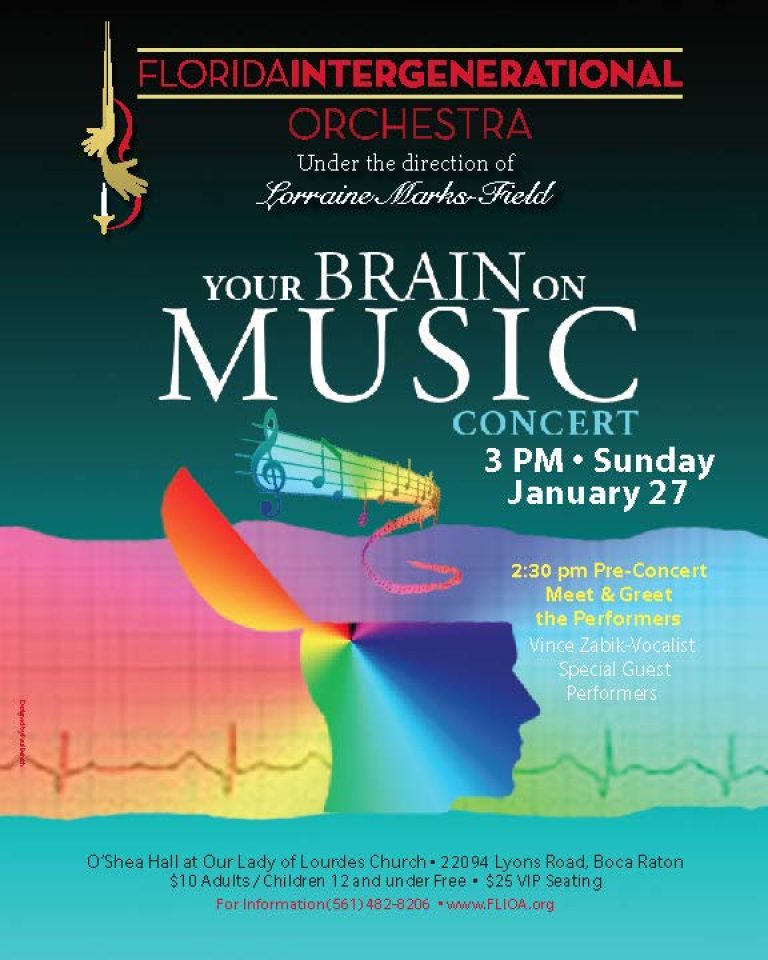
14th Season of the Florida Intergenerational Orchestra Opening Concert Stimulates Your Mind
Boca Raton, Florida-On Sunday, January 27th, 3:00
P.M. The Florida Intergenerational Orchestra, the orchestra for
everyone, will perform its first concert of the 14thseason
at O’Shea Hall on the grounds of Our Lady of Lourdes Church, 22094 Lyons Road,
Boca Raton. Entitled “Your Brain on Music,” the concert promises to
be especially engaging with the audience participating and assisting the
orchestra with Leroy Anderson’s “Syncopated Clock”—the audience gets the
clock ticking! Also the hall will bounce to the crashes of “The
Thunder and Lighting Polka, and the Radetsky March.” Especially exciting
will be the orchestra’s rendition of “Phantom of the Opera” with a guest
appearance by Julia Langley, who has sung extensively with the Cirque De
Soleil, joining our phantom, Vince Zabik. There will be many other great
selections, so grab hold of your kids, your friends and your significant others
and come on down to O’Shea Hall for a great time.
“If you want to keep your brain engaged throughout the aging process, listening to or playing music is a great tool.”
This remarkable orchestra comprised of musicians spanning the ages
of 8 to100 has over the past 13 years delighted audiences. The
gifted and award winning conductor, Lorraine Marks-Field, deftly blends the
different abilities of the members of the orchestra. Florida
Intergenerational Orchestra concerts are engaging and fun for the whole family;
everyone leaves with a smile and has a great time.
There will be a pre-concert talk at 2:30 P.M. where you can meet
and greet the performers on a personal basis, and learn how the orchestra
“Bridges the Generations Through Music.”
Tickets are $10 for adults, and free for those under the age
of 12.
Seating is by general admission but is limited-call ahead to
assure a seat—561-482-8206. Special first row seating can be obtained by
calling ahead for $25.00.
If you would like more information about the orchestra, please
call Bob Field at
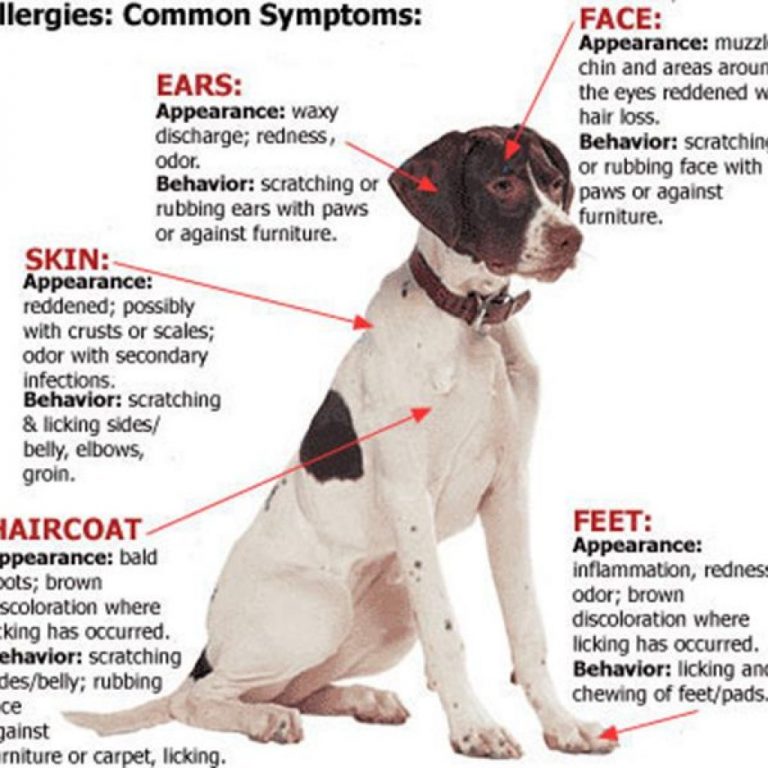
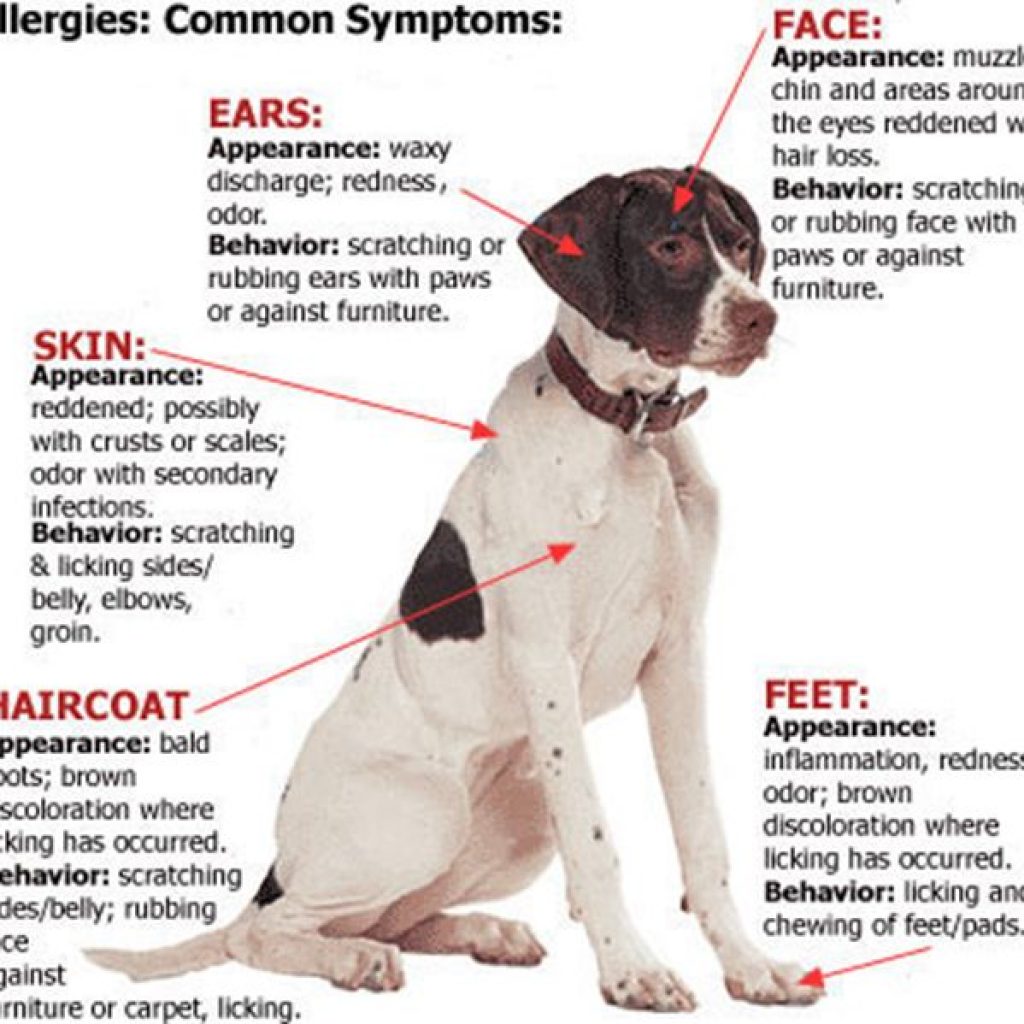
An allergy is a state of over-reactivity or
hypersensitivity of the immune system to a particular substance called an allergen. With allergies, the immune response can
actually be harmful to the body.
Food allergies and environmental
allergies can cause similar symptoms. These symptoms can include itchiness,
hair loss, skin infections and ear infections. In addition, there are other
conditions that can cause similar symptoms. This is why your vet may need to
start with diagnostics to first rule out skin mites,
fungal infections and endocrine disease, such as hypothyroidism or Cushing’s.
An indicator of a food allergy can be the location of the skin problems:
If you notice lesions all over your dog’s body, on the flanks, ribs, hips or
knees there’s a big chance it’s a food allergy. In some cases, the symptoms involve the respiratory system, with
coughing, sneezing, and/or wheezing. Sometimes, there may be runny discharge
from eyes or nose. In other cases, the allergic symptoms affect the digestive
system resulting in vomiting and diarrhea.
There are four main types of allergy in pets: atopy, flea, food, and
contact.
Other than flea bite allergies, atopy is by far, the most
common cause of allergies in pets. Atopy refers to environmental
allergies; Atopy is the name given to allergies
that result from breathing in pollen, dust, or mold. The pet’s body releases excess histamine when
exposed to higher concentrations of these allergens in the air, which prompts
symptoms.
About
ten percent of all dogs develop environmental allergies. Some breeds are more
susceptible, such as: Retrievers, Terriers, Boxers, Dalmatians, Bulldogs,
Shepherds, Beagles and Irish Setters.
The first way to get relief for your pet is
with antihistamines. Unfortunately, antihistamines are only effective in 30% of
dogs.
The next option is a much stronger medication:
corticosteroids. Steroids are much more effective at treating allergy symptoms
but are not recommended for long-term use because of possible severe
and permanent side effects
At Anzer Animal Hospital, we
continue to exceed all clients expectations by offering allergy testing, a way
to get a positive diagnosis for atopy (inhalant dermatitis) and to some contact allergies. When an allergy to a specific
substance can be identified, the dog can receive immunotherapy
(hyposensitization injections).
Allergy shots are the only effective method to stop the progression of
allergies.
Allergy testing should be considered for any animal that is suffering
from allergies that occur for more than four months out of the year, and or do
not respond to traditional treatment.
It’s important you seek immunotherapy treatment as soon as possible for your allergic pet, since environmental allergies are progressive and will worsen as a dog gets older, it is necessary because of their quality of life, and also because secondary bacterial infections could develop as a result of the allergies.
In junior high school I was part of a student exchange program with Arizonan Navaho Native Americans. In an orientation meeting that included teachers, parents and students, we discussed the possible cultural events available to our exchange guests during their visit. In my naïve middle school manner, I asked, “What cultural things could we take them to?” Everyone laughed and, embarrassed, I immediately thought I’d asked a stupid question. The parents were actually laughing because they were painfully aware that their 1969 Southern California suburbs offered very little culture. It took an hour-and-a-half drive to Los Angeles to find a legitimate art world.
For a time, South Florida was very similar. Miami, Jacksonville and Tampa
may have been the few cultural destinations found in this swamp-of-a-state. Roadsides
were fraught with sideshow-esque attractions like Sunken Gardens, Dinosaur
parks and gator handling demonstrations. There were the Barnum and Bailey’s
circus animals and acrobats in the Tampa Bay area. But times have changed and
now South Florida—particularly West Palm Beach—has more venues than can be
supported by the culture-seeking community. After nearly a century, thankfully,
Florida’s live performance standard has raised itself to include world-class
acts.
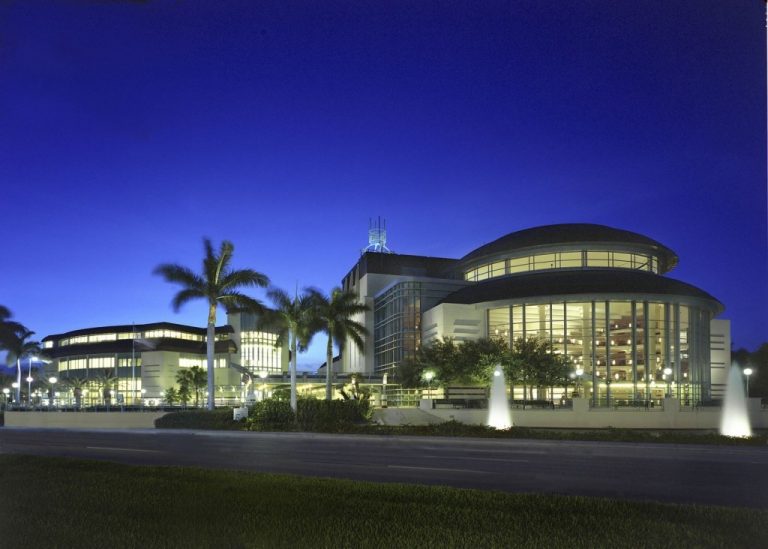
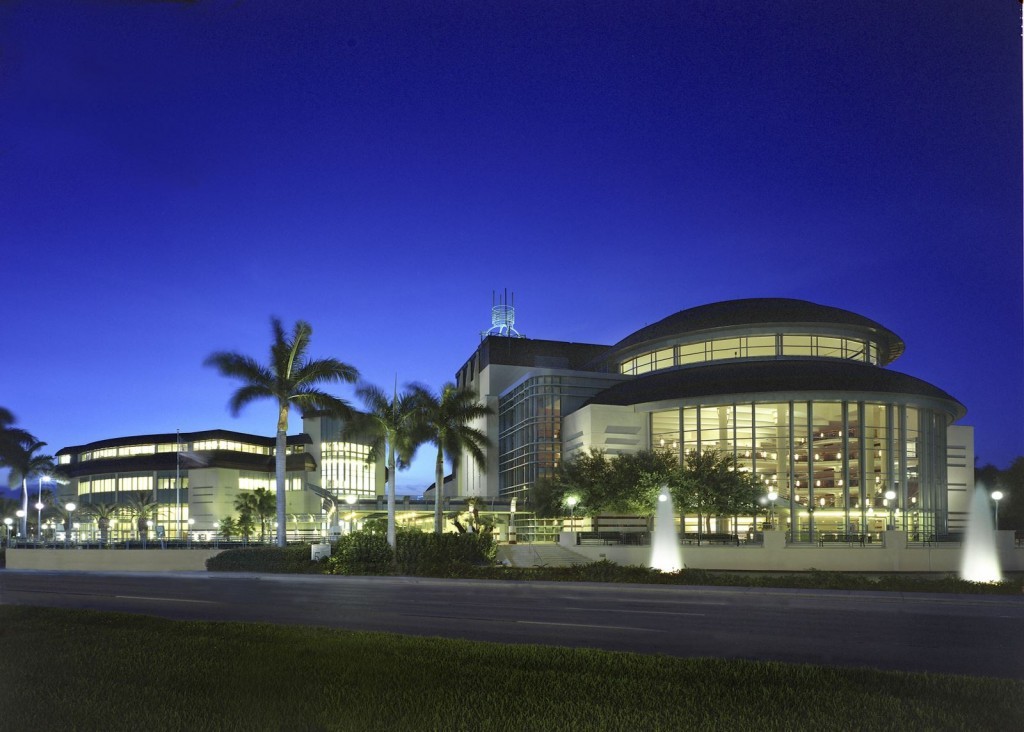
From Palm Beach Gardens to Boca Raton, there are over 30 active performance platforms vying for public attention. There’s the Kravis with his main auditorium and Black Box Theater; the Norton Museum has a stage; the Four Arts has a theatre; Palm Beach Island has the old movie house. And most cities have their own municipal amphitheater. This number does not even take into account the excellent school venues like The Kings Academy, which recently garnered attendance from Disney officials with their premier student version of Newsies.
It’s all too easy for us to snuggle up next to our Netflix and YouTube
outlets and feel sufficiently entertained.
One regional house is pouring millions into a renovation seeking to
accommodate more concert-going traffic. The Kravis Center is currently under
construction to add space to their lobby, parking and common areas.
Recently, Florida’s “Greatest Show on Earth” had to close its doors because
it could not compete with the digital age’s plethora of diversions. Let’s hope
that the brick and mortar stages of our societal life don’t follow suit.
What does all this have to do with January 2018? What if we all resolved
to support the arts this year? What if we saved our Starbucks money and put it
toward something that stayed with us longer than the caffeine high of a Grande
Peppermint Latte? What if we cancelled some of our online subscriptions to
shallow and unedifying sites and channels?
The transforming power of art, music and drama would sure to make us
better people; more balanced, socially connected and personally fulfilled. To
help us start the New Year on the right foot, here are a few offerings waiting
to be enjoyed:
Kravis Center:
The Simon and Garfunkel Songbook – Jan 2
Jay Leno – Jan 2
Celebrating Ella (Fitzgerald) – Jan 5
National Symphony Orchestra of Romania (Strauss,
Ravel) – Jan 6
Now, I’m the
hunter, brave and true, and this is my trusty gun.
I hunt wild
rabbits, ducks and geese and kill them just for fun.
Those armor
piercing, Teflon- coated bullets are the best.
Especially for
shooting those squirrels who wear bullet-proof vests.
Now, I’m in the
NRA, an honorable man.
Defending the
amendments rights as a good American can.
Without the right
to carry arms, we wouldn’t stand a chance.
And then there’s
all the stock I own in ammunitions plants.
Now, I’m in the
Senate and I’m nobody’s fool.
I’m tough and
independent, no special interest tool.
Now, I believe in
gun control, but all you need to know.
The NRA is the
group that gives me my campaign dough.
Now, I was toilet
trained at 23 ‘because I was insecure.
I’m a paranoid
schizophrenic with delusions of grandeur.
They locked me up
because I waved my pee-pee at a nun.
But, though I
cannot drive or vote, I still can buy a gun!
So, if you’re the one who takes up the gun.
From the mantelpiece or shelf.
Eliminate the middle man and shoot your damn self!
***
John Rifenberg is co-chairman of the writing group of Royal Palm Beach. He has just finished his newest book “The Alphabet Out of Order,” which is an assortment of stories and poems, including his award winning short stories.
As some of you know, I experienced a seizure last year. Which included all of its accompanying pals: Ambulances. Stretchers. Emergency rooms. Blood tests. X-rays. MRIs. EEGs. Spinal taps. Smiling nurses with syringes sporting foot-long needles. Doctors who looked like they hadn’t even been b’ar mitzvah’d yet.
Wendell Abern. Photo by Allen Giese.
Since then, I’ve been recovering. Beginning
with rehab at HealthSouth.
I will not bore you with lengthy
descriptions of exercise machines, demanding trainers, and the grueling process
of learning to walk again. Suffice it to
say that I “graduated” after a month, and they gave me a T-shirt emblazoned
with the announcement, “My Independence Day … Back to the Things I Love.”
Plus a box of Pull-Ups.
“What are these?” I asked the
nurse who had given them to me.
“They’re called Pull-Ups,” she
said.
“Yes, I know how to read. But what
are they for?”
“Um … protection. In case you
leak.”
“In case I – wait! What? Are you
saying these are adult diapers?”
“They’re gender-specific. These
are the male version.”
“I refuse to wear diapers!
“Up to you. We also have another
gift. From your kids.”
She smiled. I did not like that
smile. Something sinister was about to happen.
About a year or two after I’d
become a widower, my kids realized I had a tendency to flirt with women. Okay,
I admit it. It’s true. I happen to like women. Still, that did not prepare me for
the other T-shirt the nurse handed me.
The wrapping paper around the T-shirt
included a Post-It note, reading, “Never wear this to any Temple, or to any Sunday
services.” The front of the T-shirt read, “Senior Sleaze.” The back, “Aging
Slut.”
After my stint at HealthSouth, I went home and
proceeded to get sick again. Couldn’t eat. The mere thought of food churned my
stomach sideways. My daughter had assumed the role of home overseer, and
following a siege of dry heaves, she called 9-1-1.
Another ambulance. Another stretcher. Another hospital stay, peppered
with countless needles. After five days, they declared me ready for more rehab.
This time, they sent me to SunriseHealth and Rehab.
My only real problem at SunriseHealth
was a rehab nurse named Cari. A Marine
drill sergeant disguised as a physical therapist.
I have never been able to verify it, but I’m convinced Cari had been planted there surreptitiously … by my kids. Beautiful blonde. Tall. Slim. Lake Placid blue eyes.
“You can too walk some more!” she’d
bark at me after ten or fifteen steps. “You’re walking to the end of this hallway or I’ll see
you get no dessert for three days! C’mon, walk! Heel to toe! Heel to toe!”
Cari did not permit shirking,
which she considered pathetic malingering. Grudgingly, though, I have to admit
to her expertise. I was walking with a walker in five days; without a walker in
ten.
My stay at Sunrise Health & Rehab did have some uplifting moments. I discovered a huge heartfelt, caring support group: friends from my congregation; neighbors whose last names I don’t even know; bridge players from all over South Florida.
But nothing and no one compared to the special attention given me by dear friends, Gary and Karen.
One night, under the cover of
darkness, they smuggled in a cheeseburger and milk shake from my favorite
five-star restaurant, Steak n shake.
And they outdid themselves three
days later, on my birthday.
Several years ago, I had mentioned
to Gary and Karen that I considered myself the world’s biggest dog-lover.
Somehow, they remembered that. And so, on the day I turned 85, a service dog
named Koontz padded into my room (along with his handler).
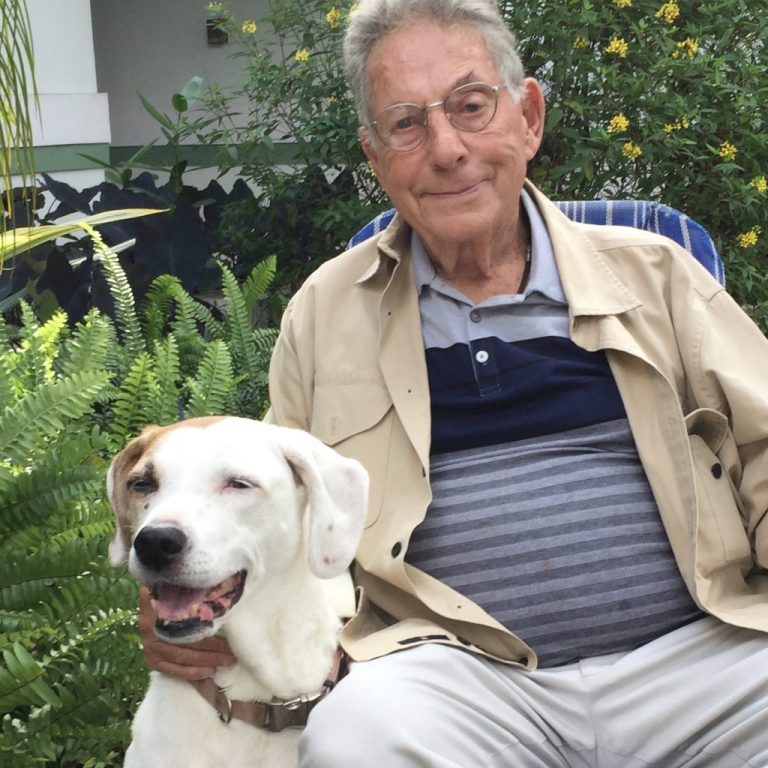
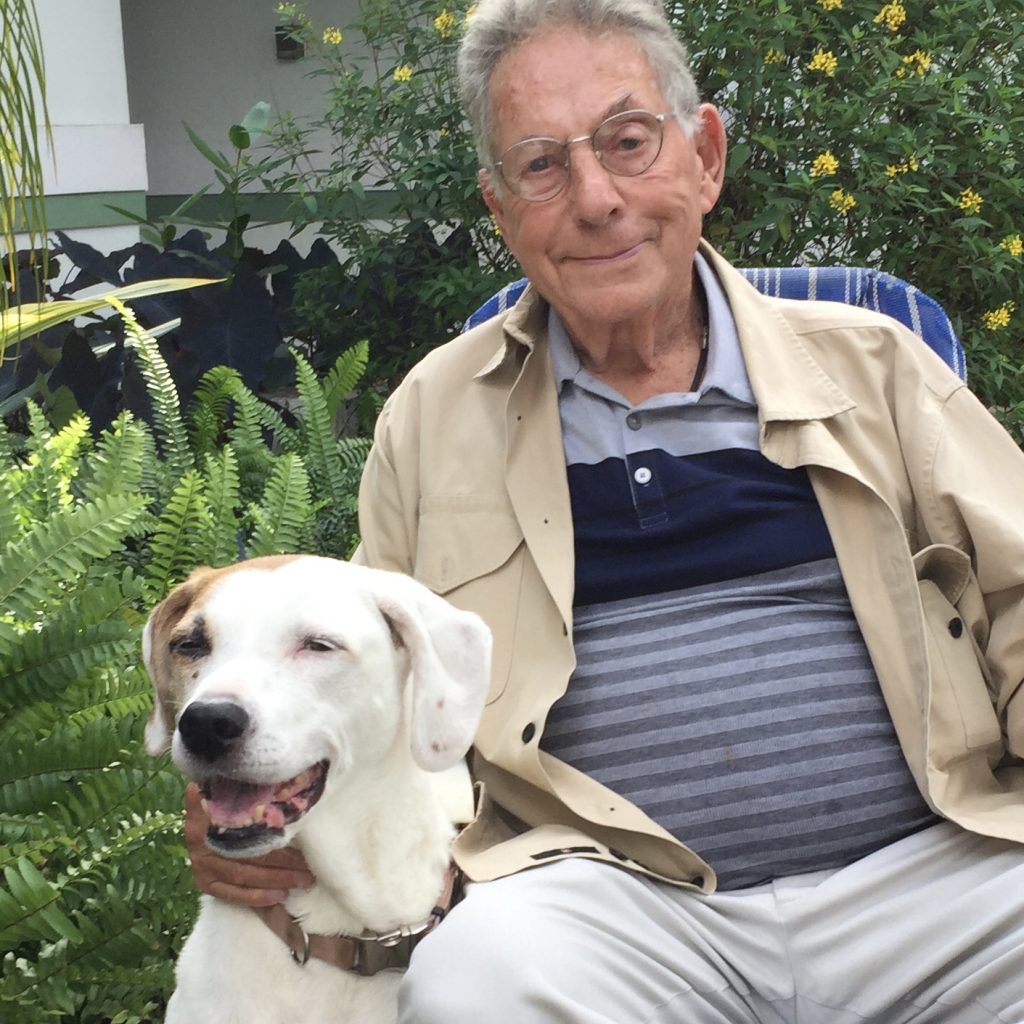
Koontz may be the sweetest dog in
South Florida. We got along famously.
For a half-hour, we schnoogled together. Lots of chortling from me. Lots of
tail-wagging from him.
When I called my kids and told
them about it, my son said, “What a great birthday gift!” My daughter agreed,
saying, “That’s about the sweetest, most thoughtful gift I’ve ever heard of!
For anybody! For any occasion!”
“I hope you thanked them
appropriately!” my son said.
I yawned. “Not really, I said. “I like
to give them a hard time. Told them my arm was now in a cast because the dog
had tried to take a chunk out of my forearm.”
A double chorus of, “DA-ad!”
“I told them that Gary and Karen
had somehow found the only anti-Semitic dog in South Florida.”
“DA-AD!”
My kids, of course, knew I was
only kidding. And when I told them I was wearing the “Senior Sleaze” T-shirt to
all of my physical therapy sessions, they didn’t believe that either.
The worst part of my year-long
recovery process was being told I could not drive. Florida law states that a
seizure patient must wait six months before driving again.
Imagine having to ask someone for
a ride every time you need a loaf of bread or have to pick up a prescription! I
had to choose between bankruptcy proceedings after endless rides from Uber, or
extending already-overused friendships. I chose the latter.
Thank heavens for Rick, a friend from my
congregation. He ended up driving me everywhere. Doctor appointments. Endless medical tests at the Cleveland
Clinic. Shopping trips to Publix. Treks
to bridge games in Weston and Pembroke Pines.
One day, I asked Rick to show up
at my place at around one. When he arrived, he asked, “Where to, today?”
“Strip club of your choice,” I
said.
“Very funny,” he said. “Don’t
forget,” he said, “I have your kids’ phone numbers.”
I frowned. “Okay, okay.” I gave
him the address of my cigar store. He wasn’t very happy about that either.
*
The year 2018 was some year for me.
I was actually sick for about six weeks. And recovering for ten months. Now I’m
recovering from the recovery.
The words “climate change” and “global warming”
invoke a myriad of strong opinions, emotions and feelings.
Last week, while gathering with a group of colleagues the conversation of climate change became a talking point. What makes our group so incredible is that we are all quite unique individually but collectively we mesh together very well. We have differing viewpoints, can intellectually converse, and still cordially agree to disagree.
I am not a scientist, but since I do write about sustainability I found this to be a great opportunity to take the questions that were discussed and pose those to an expert on the subject. Fortunately, I had the privilege of speaking to not only an expert but one of the most renowned scientists, Dr. Lonnie Thompson, who is a paleoclimatologist and professor at Ohio State University. Through his research, he is internationally known for his study of ice cores and ice caps worldwide.
Dr. Lonnie Thompson
Is Climate Change a Hoax?
Dr. Thompson provided the most
obvious answer to the question – is climate change is a hoax? “Just look
out your door.” He replied. And, while most of us look outside our window
we do not actually study scientifically what is going on with the climate, and
if there is real change that can be measured.
Dr. Thompson and his group
drill ice cores all over the world looking at the history of precipitation and
the perspective of change. He noted that when looking back over the last
2000 years, and reviewing the isotopes, there is a consistency that has taken
place, but there have been significant changes over the last 50 years.
These changes are driven by the increase in temperature. Even though we only had actual temperature
data going back 150 years, the research of Dr. Thompson and those in other
fields, is able to scientifically identity the Earth’s rising temperatures.
How different the 21st century changes are in comparison to thousands of
years previous, is the most convincing factor that climate change is real.
From a scientist’s perspective, what do you say
to someone who says that if climate change is real, it is a natural occurrence,
and man is not to blame?
Unfortunately, with the vast
availability of information available on the internet there is no
differentiating between a credible source and claims made with little or no
scientific fact. Anyone can publish their own opinions, post a blog, or shoot
a video that are very believable and because of the power of social media can
be easily distributed to mass audiences.
It is true that climate has
always undergone change through time. The natural forcings such as
changes in the orbital energy coming into the Earth which changes the
distribution of radiation on the surface of the Earth. Changing radiation
output of the sun due to solar cycles, major volcanic eruptions that put
aerosols into the stratosphere that can cool the surface of the earth for one
or two years after an eruption as well as natural climate variations driven by El
Ninos, monsoons, and North Atlantic oscillations, for example.
The theory that climate change
is not directly affected by man does not account for, as Dr. Thompson’s points
out, that it is man who is contributing to more greenhouse gasses being put
into the atmosphere. On of top of that, aerosols are being put into the
air at an alarming rate through industry, agriculture, and the changes needed
in the last 50 years to support the vast number of humans now currently living
on the planet. Along with that, plastic is manmade and is
contributing to much of the waste that is seen not only on land but in the
oceans as well.
The more people we have living
on Earth means more than we need to sustain life. In order to get the
food that we need, forests are being cleared, and that in of itself changes the
albedo (the measure of the diffuse reflection of solar radiation out of the
total solar radiation received by an astronomical body) on the planet.
The examples are endless, but simply put, climate change is
directly impacted by humans because “there is so many of us” living on the
planet, and more than ever before.
If man does at least share in the accountability,
how do you respond to the argument that the Earth will heal itself and
naturally adapt to said changes?
A widely distributed ideology
is that the planet is self-healing and will naturally adjust to whatever change
in climate there is, no matter if it is man made or not. And,
according to Dr. Thompson “there certainly are balancing factors on our
planet.” For example, when taking a
simplistic look at the glaciers in Greenland and in other areas of the world,
they have the same effect as an old “icebox’ refrigerator. The sheer
presence of the glaciers keep the Earth’s temperature cooler, but when that ice
melts the Earth’s temperature rises.
After a while the natural systems, like the glaciers, that help regulate
the Earth’s temperature are no longer there to help cool the Earth.
If there is climate change, and man is primarily
the culprit of such, what about the claim that the fears expressed by
scientists are at best exaggerated for political gain and at worse for a
specified agenda.
There is skepticism from many
people, including a lot of my friends, that while they may believe that
glaciers are melting, there is skepticism that scientists in general have an
agenda that is politically motivated, to which Dr. Thompson addressed, by saying
that “anyone who has ever talked to a scientist knows there is no agenda.
If I could find another avenue other than rising greenhouse gases in our
atmosphere, I would shift tomorrow.” If
any scientist could find a credible alternative solution to the Earth’s rising
temperatures, they would likely win a Nobel prize – “there are many scientists
who have tried to find other explanations but none have been found.”
The motivations of scientists
are much different than that of a businessman whose motive is to make money.
A company is primarily concerned with increasing profits. Together, they have a singular
objective.
A scientist, on the other hand,
has strict guidelines and standards for their research. Certainly, it
does take funding to do the research but the driving force is much different
for a scientist. As Dr. Thompson points out, “Scientists are driven
more out passion than out of money.”
Yes, Dr. Thompson did work with
Al Gore on the documentary “An Inconvenient Truth” and because Al Gore is a
politician, and from a particular party there is some who see some political
bias, but Dr. Thompson has also worked with the likes of the late, Senator
McCain, who was “very much concerned about climate change.” Dr.
Thompson had a meeting in Washington with Senator McCain that included not only
the most highly respected scientists but also heads of insurance companies as
well.
It is insurance companies, and
especially property insurance companies, that are losing money, because of
climate change. The increase in the Earth’s surface temperature has
directly coincided with extreme weather in the form of what we have witnessed
here in Florida with not only hurricanes, but much stronger than normal
hurricanes. There are also fires, floods, and other natural disasters
that are made substantially worse due to climate change.
In fact, in 2017, over $310
billion dollars was lost because of climate change, which has a direct impact
on insurance companies.
Looking at the money lost, only a small amount is covered and the difference is picked up by taxpayers as well as individuals themselves. Working in the property/casualty insurance industry, there are major concerns about the increased risk, because they base their future projections upon past performance, but those projections are no longer accurate.
The economic costs of climate change extend
further into so many different industries outside of casualty insurance, and
includes municipalities right here in Florida. In Miami, because of
the glaciers melting all that water is going into the ocean resulting in rising
waters, and as a consequence, flooding.
And, while some may think that scientists are
sounding the alarm too quickly and causing undue panic, Dr. Thompson states the
opposite in that, “the scientists we know are conservative and we generally
understate.” Scientists have understated the problem and have even been
surprised that we didn’t see coming so quickly the greatest risks. The rapid changes, even from only 20 years
ago, is happening at a much quicker rate than most could ever imagine even in
the scientific community.
The question is not whether climate change is
man made or not, because that does nothing to solve the problem, but rather how
do we rectify the effects of climate change, which are all too real?
“Going back millions of years, there were no
glaciers, and sea levels were higher, but people weren’t here.” Dr.
Thompson stated. “We built on the
coasts.” And, it is the coastlines that
are the most vulnerable to climate change. Ocean levels are rising, and
that puts the people living there (here) at risk. An animal, or a plant, can migrate inland
but humans have built so much of our infrastructure in coastal areas that are
now at risk.
Never before have we had so many people
inhabiting the Earth, to the tune of some 7.5 billion people, and that is very
taxing on the biosphere. Dr. Thompson’s expertise is studying
glaciers, and during the course of such research he believes without
intervention in time the glaciers will disappear.
That is not to say that Dr. Thompson is
fatalistic about our future, because he is anything but, and he is optimistic
that some of our greatest innovations have been as a result of not having any
other choice. In the end, “when there is no other excuse, then we
do the right thing.” There is a basic
human nature that pulls us together in times of great need. We come together as a community, as
Floridians we have done time and time again after hurricanes to rebuild and
help our neighbors get back on their feet.
What it is going to take, according to Dr.
Thompson, is for everyone to get on the same page and find solutions.
These solutions can lead to incredible economic growth as well as
provide a much better environment not only for us, but for our children, and
their children’s children.
Dr. Thompson is optimistic we will come to this
stage where we do come together, and we do find viable, sustainable solutions.
The question becomes, how much pain do we endure before we do
that? At the end of the day, we have
to deal with what is. Nature can be
very cruel. “We can deal with this.”
Dr. Thompson professed. “We can
make the world a better place than it is right now.”
Granted, if you are still skeptical about
climate change maybe asking a renowned scientist is not the answer.
Maybe it is an insurance executive whose job is insuring
residential and commercial property owners?
Change typically does not come quickly.
Viewpoints are as much based on emotion as they are on reason.
What we think we know is determined by our experience, our
background, and our point of view. In order to change the view, we have to look
at something from a different point of reference.
When it comes to climate change, there will be
fiery debate, but at the end of the day nature always bats last and that will
directly affect all 7.5 billion of us.
2018 was a hectic year with events such as the summit of U.S President Donald Trump and North Korean President Kim Jong Un, the Royal Wedding of Meghan Markle and Prince Harry, the Winter Olympics in Pyeongchang, South Korea, as well as the tragic event of the Marjory Stoneman Douglas shooting back in February of this year, which has also prompted a movement for younger audiences to fight back against social and political injustices. With 2019 coming closer and closer every day, something the world can always appreciate and connect with is coming up with a new year’s resolution. People usually come up with a resolution to lose weight or to stop procrastinating with work or school, but some of us struggle to find the perfect resolution.
Before finding the
perfect resolution we must dive into the history behind the modern day idea of
a new year’s resolution. The idea of a news year’s resolution traces back to
many cultures and religions from around the world. The Babylonians made
promises to their gods at the beginning of each year to return objects that
have been borrowed or stolen, similarly the Romans made promises at the
beginning of the year to the god Janus which later influenced the name of
January. In the Christian religion the holiday Lent is a holiday where a Christians
fast and give up types of necessities for forty days, many people consider this
holiday as a symbol for a new beginning and sacrifice. The modern day idea of a
new year’s resolution didn’t start taking off until the first half the the 20th
century in which one sets a goal or multiple goals to achieve by the end of
that coming year.
Here are some ways to
find the perfect resolution that properly suits you….
When trying to find the
perfect resolution, it always a good idea to give yourself a year review and
evaluate and highlights and rock bottoms of that year and use those memories as
a guideline of an area of your life in which you would like to improve on.
Think about how this will affect you and the people around you.
Clear out the clutter!
Before committing yourself to anything, try to add a little organization in
your life or start a little earlier on the the spring cleaning this year
(because I know I need to). Whether it’s something as little as tidying up the
kitchen or something as big as redecorating the entire house. Getting rid of
the clutter in your life opens up a new potential pathway to success because
not only will your life be more organized, but so will your goal.
When you’ve finally
picked your goal, don’t be afraid of the possibility of failure. Everyone makes
mistakes. At first it may be hard to stick to a commitment but over time it
will become a routine. Believe in yourself and you will get there!
Pick a date and go for
it.
My new year’s resolution
is to hopefully be more organized with school and in my personal life, but
overall, I just want to be happy. So whether you’re spending new year’s eve in
Times Square , a party with friends, or with your dog at home and your still
struggling to find that perfect resolution, remember these steps this coming
year but just how the saying goes this year will be a “New year, New me!”
Two Wellington-based sisters — Alexandra and Nicole Wantlin — are headed in late December to participate in a pair of All-American rugby camps/trials at the U.S. Olympic Training Center in Chula Vista, CA. Alexandra is 16 and a junior at Wellington HS. Nicole graduated from Wellington HS this past spring and is enrolled at Army at West Point. Nicole is playing for Army’s varsity women’s rugby team. Both Nicole and Alex are members of the Wellington Wizards Rugby Club.
Nicole, Left, in action in the Army vs. Navy rugby game, in which the Army won 50-0.
Alexandra
is attempting to make the Girls High School All-American team — U18s.
Nicole is
attempting to make the Girls Junior All-American team — U19s.
During the recently completed Thanksgiving weekend, Alex played in the New York 7’s rugby tournament as a member of Atlantis, a travel rugby club based out of Pennsylvania. The Atlantis team played in the Elite Girls HS U18 age division and won it. The tournament was held at the Randall Park in Brooklyn. It was repeat victory Atlantis as the team won in 2017, as well.
Alex Wantlin in action
The
All-American rugby program plays a pivotal role in the identification and
development of future U.S. national team players.
Alex is three-year letterman in
soccer at Wellington HS. To date, she is leading her team in scoring with
nine goals for the Lady Wolverine varsity soccer team. Last spring, Alex
and Nicole earned a letter with Wellington High School’s varsity lacrosse
team. Plus Nicole lettered in lacrosse and cross country during her
junior year, too. As a freshman and a sophomore in California at Rancho
Santa Margarita’s Tesoro HS, Nicole lettered in cross country and in track
& field where she threw the shot put and discus.
It’s also worth noting that Nicole’s twin sister, Jax, plays soccer for NCAA Division II Florida Southern in Lakeland.
Jax playing soccer.
At Wellington HS, Jax lettered in
soccer, cross country, and track & field.
“It’s a pure joy to see how
they have thrived and helped others to be good role models as teammates,”
said Burt Wantlin, the father of all three girls.
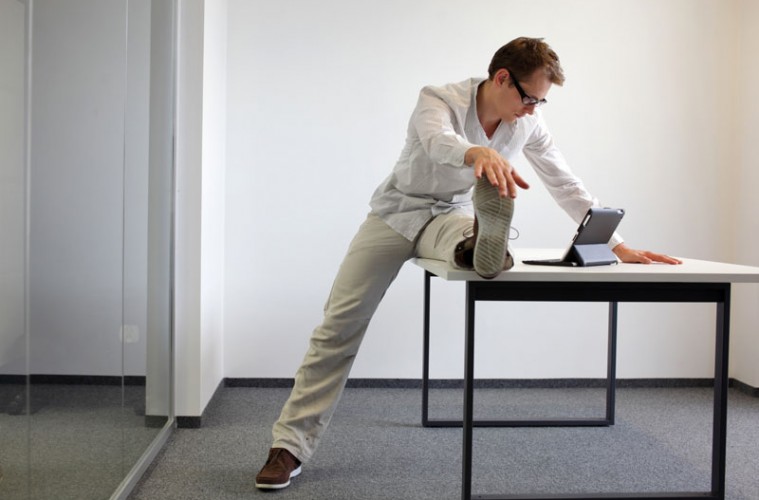
The ‘Inactivity Pandemic is now impacting more than 80 million Americans, especially those people who happen sit behind a desk all day. But working at a desk doesn’t mean your time at the office has to be a sedentary experience. Believe it or not, but you can incorporate exercise and fitness – called ‘deskercizes’ — into your office experience without venturing too far from your desk, which is great news if you are looking to remain fit and supple.
There are ten ‘deskercises’ which can transform the white-collar desk job into a fun, rewarding, manageable fitness frenzy. One of the underlying messages is that Americans must incorporate physical activity into their lives because sitting is now sabotaging their health. These ten office fitness tips — compiled by Cedric X. Bryant, chief science officer at the American Council on Exercise, and John Porcari, executive director of La Crosse Exercise and Health Program at the University of Wisconsin-La Crosse – are great fitness tips for people who are looking to remain fit and flexible throughout the year, especially during the cold winter months.
Paper Pushups – With your arms
outstretched while grabbing the edge of your desk, lean at 45 degrees, and
starting doing pushups. Consider 20
every hour on the hour.
Book Press – Pick up the
heaviest book that you can hold with both hands. Then, extend the book above your head and
then lower it down behind your neck.
Repeat the process. It will help
your triceps.
Shoulder Blade
Squeezes
– To improve your hunched posture, stand up and squeeze your shoulder blades
back and forth. Try holding the squeeze
on your shoulder blades for 10 seconds.
Office Yoga – Keep a yoga
matt at the office and lay it out on the floor for some impromptu
stretching. Consider getting in the Zen
position for a few moments.
Chair Squats – Stand a few
inches from the edge of your chair, lower yourself until you are seated in your
chair, stretch out your arms parallel to the ground, and keep your back
straight.
Tricep Desk Dips – With your back
to a desk, reach back and grab the edge of the desk. Then, bend your arms and lower the body while
putting tension on your triceps.
Wall Sits – Stand next to a
wall and lower your back along the wall until your legs are parallel to the
floor. Hold that position, then have
your back move up the wall to the original position.
Standing Calf
Raises
– While grabbing the back of your chair, put your feet together, and get up on
your tippy toes. Hold for 10
seconds. Repeat this process to
strengthen your calf muscles.
Leg Raises – While sitting
in a chair with your back straight, extend each leg – one at a time – and hold
it – parallel to the floor – for 10 seconds.
Repeat 10 times. This builds your
abs.
Phone Pacing – While on the telephone,
use a headset and walk around your office while on the phone rather than just
sitting at your desk.
And, some people are taking office
exercise a step further by removing the chair altogether.
“Having
a stand up desk is helpful in maintaining an active lifestyle,” says VJ Mayor,
senior director of communications, National Confectioners Association
(Washington, DC). “You don’t realize how
much your posture is affected by sitting so much. I find myself doing many of
the exercises listed as I feel it helps stimulate my brain and be more productive in the workplace.”
According
to PHIT America, the non-profit cause focused on reversing the ‘Inactivity
Pandemic,’ more than 10 independent studies confirm exercise energies the brain
and is more receptive to learning.
The ‘treadmill desk’
is also gaining in popularity. It allows
the user to walk on a treadmill, at a low level speed, while speaking on the
telephone, working on their computer, or discussing business opportunities with
colleagues. And, that’s what a number of
golfers do while on the golf course – they walk and talk.
People who
exercise in the workplace agree that they are more creative and productive
because that moderate level of physical activity generates the release of
endorphins that triggers the positive energy.
“The
issue of fitness in the workplace is important because physical inactivity in
the U.S. is negatively affecting rising health care costs, national
productivity, absenteeism in the workplace, scholastic achievement in our
schools, and the ability of the U.S. military to attract fit troops,” says Jim
Baugh, Founder, PHIT America.
This concept of
more movement in the workplace has triggered support from the medical
community.
“I think the
concept of trying to build activity throughout your day is so important. And it
makes you healthier,” says Dr. Jordan Metzl, New York’s (NY) Hospital for
Special Surgery.
“As a family physician, I have seen
first-hand that exercise is a powerful medication,” says Dr. Robert Sallis,
medical doctor/co-director, Kaiser Permanente Medical Center (Fontana,
CA). “My patients who exercise are
consistently healthier and live longer and years of research back up this
observation.”